
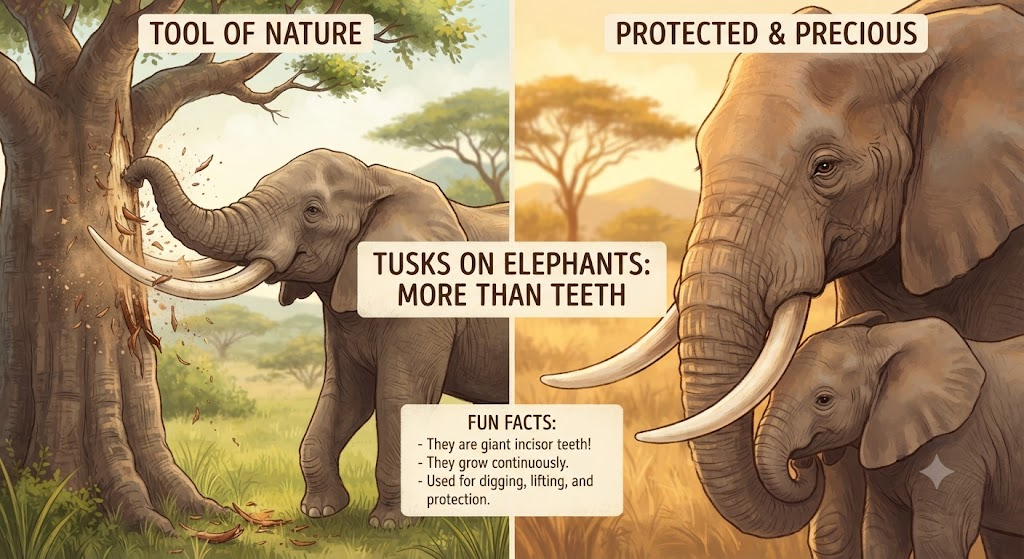

Did you ever look at a big elephant and wonder about those long, white sticks poking out of its mouth? Those cool-looking things are called Tusks on Elephants, and they are much more than just cool decorations! They are actually giant teeth that keep growing all through the animal’s life. When you see an elephant walking through the grass or playing in the mud, those teeth help it do all sorts of important jobs. Just like you use your hands and tools to eat or open things, an elephant uses these special teeth to survive in the wild. We are going to take a fun trip to learn all about why these teeth are so super special, how they help our big gray friends, and why we need to keep them safe. Are you ready to find out more? Let us jump right in and see what makes these giant teeth so amazing!
What Are Tusks on Elephants Made Of?
When we think about bones, we usually think of the hard white parts inside our arms and legs. But tusks on elephants are not normal bones at all. They are actually made of a special material called ivory, which is the same stuff that makes up human teeth. Inside the elephant’s mouth, these long teeth start as baby teeth just like yours! But they keep growing longer and longer as the animal gets older. The part you see outside is hard, but the part hidden deep inside the skin is alive with blood and nerves. It is amazing to think that an animal can carry such heavy, strong teeth right on its face. Nature is so clever at making body parts that can do hard work without breaking. Every time you look at a big pair of ivory sticks, remember you are looking at a giant, super-strong tooth!
Why Do Elephants Have Tusks?
You might wonder why elephants even need these giant teeth on their faces. Tusks on elephants are like a Swiss Army knife in the wild! Elephants use them to dig deep into the dry dirt when they need to find fresh water during hot summer days. They also use them to peel the rough bark off tall trees so they can munch on the tasty wood underneath. Sometimes, an elephant needs to move a heavy fallen tree or clear a path through the thick jungle, and these strong teeth do the heavy lifting. They help the big animals show other animals who is boss without even having to fight. It is like having a pair of strong shovels and hammers built right into your face! Without these handy tools, life in the wild would be so much harder for our big gray friends.
African vs. Asian Elephants
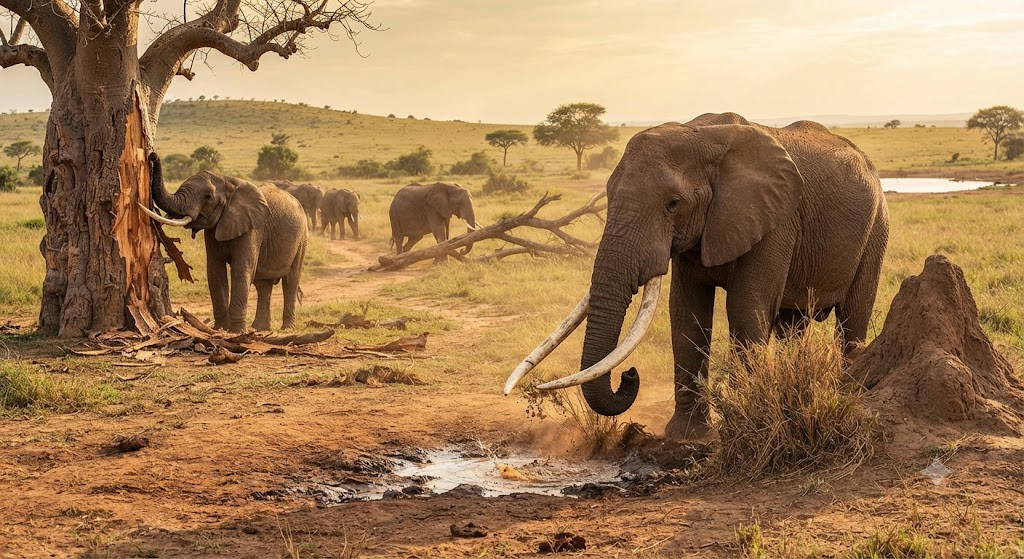
Not all elephants look the exact same way when it comes to their faces. If you look at African elephants, both the mommies and the daddies grow big, long ivory sticks. But if you look at Asian elephants, things are a little bit different! Only the boy Asian elephants usually grow long, visible teeth, while the girls have very small ones or none at all that you can see. This makes it a fun puzzle when you are trying to guess which kind of animal you are looking at in a picture or at the zoo. The African animals also live in wide-open, grassy places where big tools are super handy for digging up roots. The Asian animals live more in shady forests where they might not need quite as much heavy digging power. Every type of giant animal has grown just the right way to match its own home!
How Elephants Use Them to Find Water
Water is the most important thing in the world when you live in a hot place like Africa or India. During the dry season, all the puddles dry up and the top of the ground turns hard as rock. That is when tusks on elephants become life-saving tools! The smart animals use their sharp points to dig deep holes in dry riverbeds where cool water is hiding underground. Once they make a nice deep hole, the water fills it up, and the whole family can take a nice long drink. Other animals in the forest, like zebras and tiny birds, also use these water holes after the elephants leave. It is like the elephants are the master builders of the neighborhood, helping everyone else get a drink too. How cool is it that a simple tooth can help save so many thirsty animals?
Eating and Lifting Heavy Things
Eating is a full-time job when you are as big as an elephant and need a mountain of food every single day! Tusks on elephants help them get to the best parts of the plants that are hiding up high or locked inside hard shells. They can use their strong teeth to wedge under heavy logs and flip them over to find yummy bugs or soft moss underneath. If a tree is blocking the path to a tasty bush full of leaves, the elephant just pushes it out of the way. It is just like having a built-in bulldozer that never runs out of gas. Watching a giant animal use its face to move a tree as big as a car is truly an awesome sight. It shows us how strong nature can be when animals have the exact right tools for their daily dinner time.
Left-Handed or Right-Handed Elephants?
Did you know that you might be left-handed or right-handed? Well, elephants can be left-tusked or right-tusked too! If you look closely at tusks on elephants in the wild, you will notice one side is usually shorter and more worn down than the other side. This happens because the elephant likes to use one specific side more often for digging and scraping. If it always uses the right side to dig up roots, that side gets rubbed down shorter over time. Scientists call this preference lateralization, which is just a fancy way of saying they have a favorite side! It makes them feel a lot more like us humans, who like to use our favorite hand to write or throw a ball. Next time you see a picture of an elephant, check to see which side looks shorter!
Growing and Changing Over Time
Just like your hair and fingernails never stop growing, tusks on elephants keep getting longer as the animal gets older. When babies are born, they are too small to have any big white sticks showing at all. As they grow into teenagers, little pointy tips start to peek out from their lips. By the time they are big adults, those teeth are long, heavy, and ready for action. Sometimes, an elephant might bump its tooth too hard on a rock and break the tip off. Do not worry, though, because it does not hurt them too much just like clipping a fingernail, and it keeps on growing! It is a wonderful cycle that stays with them through all the years they spend roaming the wide grasslands and shady forests.
Why People Hurt Elephants for Ivory
Sadly, not everyone looks at these animals with kindness in their hearts. Some bad people want the ivory from tusks on elephants to make fancy carvings and jewelry to sell for lots of money. To get the ivory, they harm the poor animals, which makes the number of elephants in the world go down very fast. This makes me feel really sad because elephants are such gentle, smart creatures that care for their families just like we do. A world without these wonderful animals would be a very boring and lonely place. We have to speak up and stop people from buying things made from illegal ivory so the animals can stay safe. It is our job to protect the wildlife that makes our planet so bright and beautiful!
How We Can Protect Them Today
The good news is that many brave people all over the world are working hard to keep tusks on elephants safe from harm. Park rangers watch over the big grasslands day and night to make sure bad hunters cannot get near the herds. Many countries have made strict rules so that nobody is allowed to buy or sell ivory anymore. When people stop buying these items, the hunters have no reason to hurt the animals. You can help too by learning about wildlife and telling your friends how amazing these big gray animals are. Supporting groups that save nature is a great way to make sure future kids get to see real elephants walking around. Together, we can make sure these gentle giants live happily ever after in their natural homes!
Amazing Secrets of Elephant Communication
Did you know that elephants talk to each other in ways we cannot even hear with our ears? They make deep, rumbling sounds that travel through the ground for miles and miles. Tusks on elephants act like giant tuning forks, helping them feel those ground vibrations right through their feet and face bones! It is like they are sending secret text messages through the dirt to their friends far away. When danger is near or a new water hole is found, the whole group knows about it instantly without making a loud noise. This secret language helps them stay together and protect their babies from any trouble. Nature gave them an amazing communication system that lets them act like one big, happy family across the open land.

Frequently Asked Questions
Are elephant tusks just normal teeth?
Yes, they are special, oversized teeth that keep growing all through the animal’s life and are made of ivory.
Do all elephants have these long teeth?
No, African elephants of both genders have them, but in Asian elephants, mostly only the males grow long visible ones.
Does it hurt an elephant if a tusk breaks?
If it chips at the very end, it does not hurt much because the outer part has no nerves, similar to cutting a fingernail.
Why do elephants use their long teeth to dig?
They use them to dig deep into dry riverbeds to find clean drinking water when the surface is completely dry.
Can a broken tooth grow back?
Yes, the root inside the skin keeps pushing new material out, so the tooth continues to grow longer over time.
How can kids help protect elephants?
You can help by learning about wildlife, sharing fun facts with friends, and never buying anything made of animal ivory.
Conclusion
We have learned so much today about the amazing tusks on elephants and why they are so important to these gentle giants. From digging for hidden water to helping move heavy logs and talking through the ground, these giant ivory teeth are truly magical tools. It is up to all of us to care for our planet and make sure these wonderful animals stay safe and free in the wild. Let us promise to always respect nature and share the cool stories we learned with our friends and family. Why not start today by drawing a picture of an elephant and telling someone why its teeth are so special? Together, we can help protect the most magnificent animals in the world!