
English is filled with phrases that sound correct in more than one form, which is why so many people get confused about nerve racking or nerve wracking. You’ve probably seen both versions online, in books, or even in professional writing, leaving you wondering which one is actually correct.
The good news is that both expressions are widely recognized today, although one has a slightly more traditional background. This article explains the meaning, spelling differences, historical usage, grammar rules, and examples so you can confidently choose the right phrase in your own writing.
What Does “Nerve-Racking” Mean?
“Nerve-racking” describes something extremely stressful, tense, or emotionally exhausting.
People often use it to talk about situations that create anxiety or pressure.
Common Examples
- Waiting for exam results
- Job interviews
- Public speaking
- Watching a close sports game
- Medical emergencies
If an experience causes emotional strain or tension, it can be described as nerve-racking.
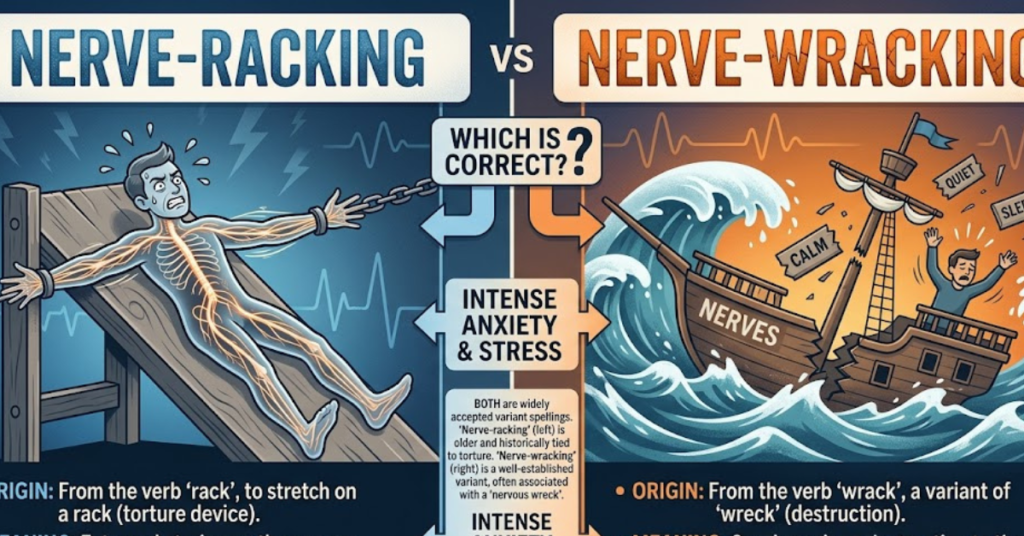
Is It Nerve Racking or Nerve Wracking?
The short answer is that both forms are accepted in modern English.
However:
- “Nerve-racking” is traditionally considered the more standard spelling.
- “Nerve-wracking” has become increasingly common and widely accepted over time.
Today, major dictionaries recognize both versions.
Why “Nerve-Racking” Came First
To understand the phrase properly, it helps to look at the word “rack.”
Historically, “rack” referred to:
- A framework used for stretching
- Something causing torture or strain
- Intense physical or emotional pressure
The phrase “rack one’s nerves” eventually evolved into “nerve-racking,” meaning something that strains the nerves intensely.
This is why “nerve-racking” is often considered the original form.
How “Nerve-Wracking” Became Popular
Over time, many English speakers began using “wrack” because it also relates to destruction, stress, or damage.
The word “wrack” historically referred to:
- Ruin
- Destruction
- Severe distress
Because the meanings overlap closely, “nerve-wracking” gradually became accepted through widespread usage.
Language naturally evolves when enough people adopt alternative spellings.
Nerve Racking or Nerve Wracking: Which Should You Use?
Choosing between the two often depends on writing style and audience.
Use “Nerve-Racking” If You Want
- Traditional spelling
- Slightly more formal usage
- Style-guide consistency
- Classic grammar preference
Use “Nerve-Wracking” If You Prefer
- Modern widespread usage
- More visually intuitive wording
- Casual or conversational tone
Most readers will understand both versions without confusion.
Which Spelling Is More Common?
Usage trends vary slightly depending on region, publication style, and audience.
In many edited publications:
- “Nerve-racking” still appears slightly more often
However, online content increasingly uses:
- “Nerve-wracking”
Both are now considered standard enough for general writing.
Examples of Correct Usage
Seeing the phrase in real sentences makes the difference easier to understand.
Examples Using “Nerve-Racking”
- The final minutes of the match were nerve-racking.
- Waiting for the interview call felt nerve-racking.
- Driving during the storm was a nerve-racking experience.
Examples Using “Nerve-Wracking”
- Public speaking can be nerve-wracking.
- The exam results were nerve-wracking to wait for.
- Flying through turbulence felt nerve-wracking.
Both versions communicate the same meaning.
Common Situations Described as Nerve-Racking
People use this expression frequently in everyday conversation.
Academic Pressure
- Final exams
- Presentations
- Scholarship interviews
Career Situations
- Job interviews
- Important meetings
- Performance reviews
Personal Experiences
- First dates
- Medical tests
- Difficult conversations
The phrase works whenever emotional tension is high.
Grammar and Hyphenation Rules
The phrase is usually written with a hyphen when used before a noun.
Correct Examples
- A nerve-racking experience
- A nerve-wracking situation
Without Hyphen After the Noun
- The experience was nerve-racking.
- The interview felt nerve-wracking.
This follows common compound-adjective grammar rules.
Why People Get Confused
The confusion happens because English contains many similar-sounding words with overlapping meanings.
Additional reasons include:
- Both spellings are accepted
- Pronunciation is identical
- “Wrack” and “rack” share related meanings
- Modern dictionaries recognize both forms
This makes the phrase more flexible than many other grammar debates.
Related Words and Synonyms
If you want alternatives to avoid repetition, several phrases carry similar meanings.
Common Synonyms
- Stressful
- Intense
- Tense
- Anxiety-inducing
- Exhausting
- Pressuring
- Emotionally draining
Each option varies slightly in tone and intensity.
Formal vs Informal Writing Preferences
Some editors and style guides still prefer “nerve-racking” because of its historical origin.
However, in casual writing, blogs, and modern media:
- “Nerve-wracking” appears frequently
Consistency matters more than strict preference. Once you choose a version, stick with it throughout your writing.
Is “Nerve-Wrecking” Correct?
People sometimes mistakenly write:
- Nerve-wrecking
This version is generally considered incorrect.
The accepted forms are:
- Nerve-racking
- Nerve-wracking
Avoid using “wrecking” in this expression unless referring literally to destruction.
FAQs
Is it nerve racking or nerve wracking?
Both are accepted, though “nerve-racking” is traditionally considered the original spelling.
What does nerve-racking mean?
It describes something stressful, tense, or emotionally exhausting.
Is nerve-wracking grammatically correct?
Yes. Modern dictionaries and style references generally accept it.
Which spelling is more formal?
“Nerve-racking” is often viewed as slightly more traditional and formal.
Why are there two versions?
The overlap comes from the related meanings of “rack” and “wrack” in English history.
Is nerve-wrecking correct?
No. “Nerve-wrecking” is generally considered incorrect.
Conclusion
Understanding the difference between nerve racking or nerve wracking is less about right versus wrong and more about language evolution. While “nerve-racking” is the older and traditionally preferred form, “nerve-wracking” has become widely accepted through modern usage.
Both phrases describe stressful or emotionally intense situations, and most readers will recognize either spelling immediately. The key is consistency, clarity, and understanding your audience.
By learning the history and grammar behind these expressions, you can write with greater confidence and avoid one of the most common spelling confusions in everyday English.