
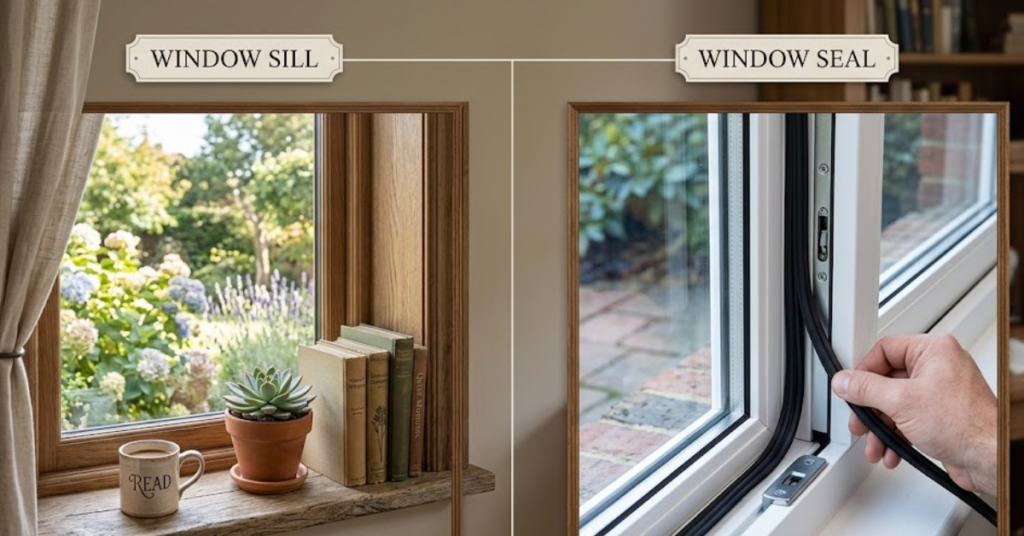

You’re looking at your window, maybe cleaning it or describing a repair, and suddenly you pause—is it window sill or window seal? It’s a small detail, but getting it wrong can change the meaning entirely.
In this guide, we’ll clear up the confusion around window sill or window seal, explain what each term actually means, and show you exactly when to use them. By the end, you’ll know the difference without having to think twice.
Window Sill or Window Seal: The Key Difference
Let’s start with the simple truth:
- Window sill is a physical part of the window
- Window seal refers to a protective barrier or sealing component
Quick Breakdown
- Sill = a flat ledge at the bottom of a window
- Seal = something that blocks air, water, or moisture
Understanding this difference is essential when deciding is it window sill or window seal in a sentence.
What Is a Window Sill?
A window sill is the horizontal surface at the bottom of a window frame.
Types of Window Sills
- Interior sill: The part inside your home
- Exterior sill: The outer ledge that helps drain water
Common Uses
- Holding plants or decor
- Supporting the window structure
- Preventing water from entering the wall
When people refer to cleaning or decorating a window ledge, they’re talking about the sill.
What Is a Window Seal?
A window seal is not a ledge—it’s a functional component that keeps your window airtight and watertight.
What Does a Seal Do?
- Prevents drafts
- Keeps moisture out
- Improves insulation
Where You’ll Find It
- Around the edges of the glass
- Between panes in double-glazed windows
- Along the frame
So, when discussing repairs or insulation, the correct term is seal, not sill.
Is It Window Sill or Window Seal?
This is the question most people ask: is it window sill or window seal?
The Simple Rule
- Use window sill when talking about the ledge
- Use window seal when talking about insulation or protection
Example Comparison
- I placed a plant on the window sill
- The window seal needs replacing
This distinction helps you avoid common misunderstandings.
Common Mistakes and Why They Happen
It’s easy to mix these terms up because they sound similar.
Why People Get Confused
- Similar pronunciation
- Lack of familiarity with window parts
- Autocorrect or spelling assumptions
Incorrect Usage Examples
- The window seal is dusty (if referring to the ledge)
- Water is leaking through the window sill (if referring to sealing issue)
Understanding window sill or window seal correctly prevents these errors.
How to Remember the Difference
If you want a quick way to keep them straight, try this:
Easy Memory Tricks
- Sill = Surface (both start with “S”)
- Seal = Stop air/water
Visual Tip
Think of the sill as something you can touch and place items on, while the seal is hidden and functional.
When Each Term Matters in Real Life
Using the right term isn’t just about grammar—it can affect communication.
In Home Maintenance
- Use sill when cleaning or painting
- Use seal when fixing drafts or leaks
In Buying or Selling Property
- “Damaged window sill” refers to structure
- “Broken window seal” refers to insulation failure
Getting this right ensures clear communication with professionals.
Quick Tips to Use the Right Word
If you’re still unsure, keep these points in mind:
- If it’s flat and visible → sill
- If it blocks air or water → seal
- Think surface vs protection
- Double-check the context of your sentence
FAQs
1. Is it window sill or window seal?
Both are correct, but they refer to different parts of a window.
2. What is a window sill?
It’s the flat ledge at the bottom of a window frame.
3. What is a window seal?
It’s a barrier that prevents air and moisture from entering.
4. Why do people confuse sill and seal?
They sound similar and are both related to windows, which leads to mix-ups.
5. Can a window have both a sill and a seal?
Yes, most windows have both components serving different purposes.
Conclusion
Understanding window sill or window seal comes down to knowing what you’re referring to. A window sill is the visible ledge you can touch and use, while a window seal is the hidden feature that keeps your home insulated and protected.
To recap:
- Use sill for the physical ledge
- Use seal for insulation and protection
- Focus on context to choose the right word
Mastering this small distinction can make your communication clearer, especially when dealing with home improvement or repairs. Keep these tips in mind, and you’ll always get it right.