
If you’ve ever been texting someone and suddenly saw “WTV,” you might have paused for a second wondering what it means. The internet is full of short forms and slang, and this abbreviation is one of the most commonly searched today.
In simple terms, “WTV” is a casual abbreviation used in digital communication. It appears in text messages, Snapchat chats, Instagram DMs, and even comment sections. However, like many slang terms, its meaning depends on tone and context. Sometimes it feels neutral, while other times it can sound slightly dismissive.
Let’s break it down clearly so you can understand its meaning and how it is used in real conversations.
Meaning of WTV in Text
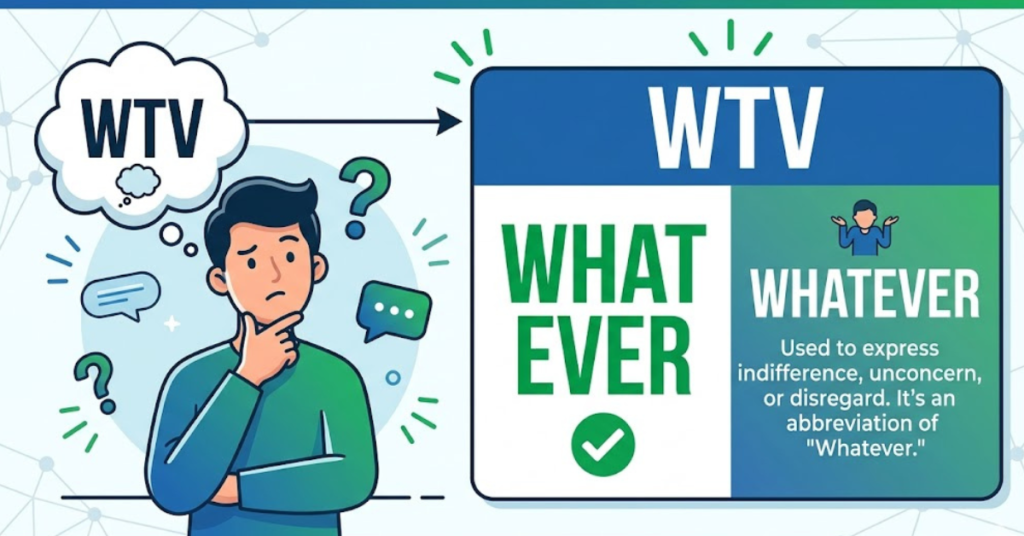
The most common meaning of WTV in texting is:
“WTV” = “Whatever”
It is generally used to show:
- Indifference
- Disinterest
- Casual agreement
- Frustration or dismissal
In other words, it reflects a relaxed or uninterested attitude depending on the situation.
Example:
Person A: Let’s go to the mall.
Person B: WTV, I don’t mind.
Here, the response shows neutrality and flexibility.
WTV in Slang and Online Communication
In slang usage, WTV is simply a shortened form of “whatever,” used for quick digital conversations.
People usually search for its meaning to understand the emotion behind it. Therefore, it can imply:
- “I don’t care”
- “It’s fine with me”
- “Do what you want”
- “I’m done discussing this”
So, it is not just a word but also a reflection of attitude.
WTV on Snapchat, Instagram, and Messages
This slang is widely used across social media platforms where short replies are common.
Snapchat
On Snapchat, it is often used in quick reactions.
Example:
Friend: “I’m not coming today.”
Reply: “WTV”
In this case, it shows casual acceptance or lack of strong reaction.
On Instagram, it appears in comments, DMs, or story replies.
Example:
“WTV looks fine to me.”
Here, the tone can be neutral or slightly dismissive depending on context.
Text Messages
In general chats, it is used when someone:
- Doesn’t want to argue
- Is tired of a conversation
- Agrees without strong opinion
For example:
“WTV, I’m not arguing.”
Meaning Based on Gender Context
The tone can sometimes change depending on who sends it.
From a girl
It may indicate:
- Frustration
- Emotional distance
- Ending an argument
From a boy
It is often:
- Casual
- Relaxed
- Sometimes joking among friends
However, context matters more than gender in most cases.
Different Contexts of WTV
Its meaning can shift depending on tone:
Neutral
“WTV works for me.”
Slightly annoyed
“WTV, do what you want.”
Disinterested
“WTV…”
Therefore, punctuation and situation play a big role in interpretation.
Why People Use WTV
This slang became popular for several reasons:
- It is faster to type
- It fits modern texting culture
- It is widely used among Gen Z users
- It works well in social media conversations
As a result, it has become a common part of online communication.
Is WTV Rude?
It can be, but not always. The tone decides everything.
Not rude when:
- Used casually among friends
- Expressing neutral agreement
Can be rude when:
- Used during arguments
- Said abruptly in serious conversations
So, understanding context is very important.
Common Misunderstandings
Many people assume it is:
- A formal abbreviation
- Always neutral
- A technical term
However, in reality, it is informal slang used in everyday digital conversations.
How to Respond to WTV
Your response depends on the situation:
- If neutral → continue the conversation
- If annoyed → clarify or calm things down
- If disinterested → change the topic or give space
In all cases, tone awareness is key.
Conclusion
To sum up, this slang simply means “whatever” and is widely used in texting, Snapchat, Instagram, and online chats. While it usually shows indifference or casual agreement, its emotional tone can change depending on context.
Ultimately, it is not just about the word itself but how it is used in conversation. Now that you understand it clearly, you can easily interpret messages and respond appropriately in any situation.