
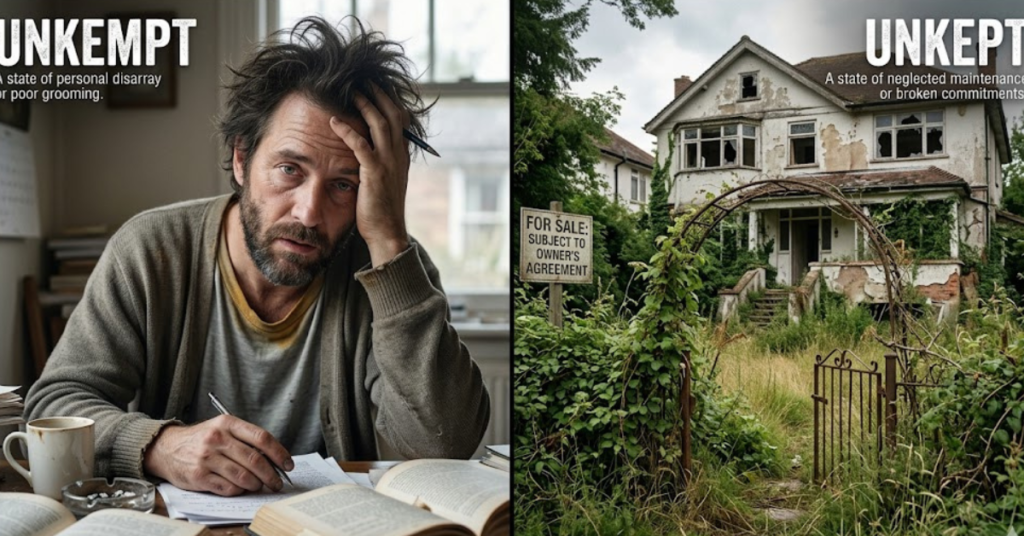

English has plenty of confusing word pairs, and unkempt vs unkept is one of the most misunderstood. At first glance, both words seem similar because they describe something messy, neglected, or not properly maintained. But are they interchangeable? Not exactly.
If you have ever wondered about the unkempt vs unkept difference or searched for the correct definition and usage, this guide will make everything clear. We’ll explore the meanings, grammar, origins, examples, and proper contexts for each word so you can use them confidently in writing and conversation.
Unkempt vs Unkept: Are Both Words Correct?
Yes, both “unkempt” and “unkept” are real English words. However, they are not used in the same way.
Unkempt
“Unkempt” is the more common and widely accepted word. It usually describes someone or something that looks messy, untidy, or poorly groomed.
Examples:
- Unkempt hair
- An unkempt beard
- An unkempt garden
Unkept
“Unkept” also exists, but it is far less common. It generally refers to something that has not been maintained, fulfilled, or honored.
Examples:
- An unkept promise
- An unkept house
- Unkept responsibilities
Understanding this distinction is key when comparing unkempt vs unkept.
Unkempt vs Unkept Definition
The easiest way to understand the difference is by looking at the definitions separately.
Definition of Unkempt
“Unkempt” means:
- Messy
- Untidy
- Not well-groomed
- Disheveled in appearance
It is most often used for physical appearance.
Definition of Unkept
“Unkept” means:
- Not maintained
- Not fulfilled
- Not kept properly
It often refers to duties, promises, or maintenance rather than appearance.
This subtle distinction explains the real unkempt vs unkept difference in modern English.
Why “Unkempt” Is More Common
The word “unkempt” has become much more popular in everyday English because it sounds more natural when describing appearance.
For example:
- “He looked unkempt after the long trip.”
- “The abandoned yard appeared unkempt.”
Most native speakers instinctively choose “unkempt” when talking about messy or neglected looks.
The Origin of the Word “Unkempt”
Interestingly, “unkempt” comes from the old English word “kempt,” which meant well-combed or neat. Over time, “kempt” became rare, while “unkempt” stayed common.
Today, many people recognize “unkempt” even though they rarely use the word “kempt” by itself.
The Origin of “Unkept”
“Unkept” comes directly from the verb “keep.” It literally means something has not been kept, maintained, or fulfilled.
Because of this, “unkept” often appears in more literal or formal contexts.
Examples include:
- Unkept agreements
- Unkept appointments
- Unkept property
Common Usage Examples
Looking at examples side by side makes the difference easier to understand.
Correct Use of Unkempt
- His clothes looked unkempt.
- She arrived with unkempt hair.
- The old cabin had an unkempt appearance.
Correct Use of Unkept
- The landlord ignored the unkept building.
- Their friendship suffered because of unkept promises.
- The field remained unkept for years.
Can You Use Them Interchangeably?
Sometimes the meanings overlap slightly, especially when describing neglected places. However, they are usually not interchangeable in polished writing.
Better Choice for Appearance
Use “unkempt.”
Better Choice for Maintenance or Obligations
Use “unkept.”
Using the correct word improves clarity and makes writing sound more natural.
Common Mistakes People Make
Using “Unkept” for Hair or Clothing
Although technically understandable, native speakers almost always prefer “unkempt” for appearance-related descriptions.
Incorrect:
- Unkept hair
Better:
- Unkempt hair
Assuming “Unkempt” Means Broken Promises
“Unkempt” relates to appearance or condition, not commitments or responsibilities.
Synonyms for Unkempt
Depending on the context, similar words include:
- Messy
- Disheveled
- Scruffy
- Untidy
- Ragged
- Disorderly
These alternatives help add variety to writing.
Synonyms for Unkept
Words similar to “unkept” include:
- Neglected
- Ignored
- Unmaintained
- Broken
- Unfulfilled
The right synonym depends on whether you are discussing property, responsibilities, or commitments.
Why Grammar Accuracy Matters
Understanding subtle word differences strengthens:
- Professional writing
- Academic communication
- SEO content quality
- Reader trust
- Overall language skills
Small vocabulary improvements can make your writing appear far more polished and credible.
Easy Trick to Remember the Difference
Here is a simple memory tip:
Unkempt = Appearance
Think of combing hair or grooming.
Unkept = Maintenance or Promises
Think of “keeping” responsibilities or maintaining something properly.
This shortcut helps you choose the right word quickly.
FAQs
What is the difference between unkempt and unkept?
“Unkempt” usually describes messy appearance, while “unkept” refers to something not maintained or fulfilled.
Is unkept a real word?
Yes, “unkept” is a legitimate English word, although it is less commonly used than “unkempt.”
Which word is more common?
“Unkempt” is far more common in everyday English.
Can I say unkept hair?
People may understand it, but “unkempt hair” is the more natural and accepted phrase.
What does unkempt mean?
It means untidy, messy, or poorly groomed.
What does unkept mean?
It means neglected, not maintained, or not fulfilled.
Conclusion
The confusion around unkempt vs unkept comes from how closely related the words appear. While both are real English terms, they serve different purposes. “Unkempt” mainly describes messy appearance or poor grooming, whereas “unkept” refers to neglected maintenance or unfulfilled responsibilities.
Knowing the proper usage helps improve your grammar, writing confidence, and communication skills. The next time you encounter the unkempt vs unkept definition debate, you will know exactly which word fits the situation best.