
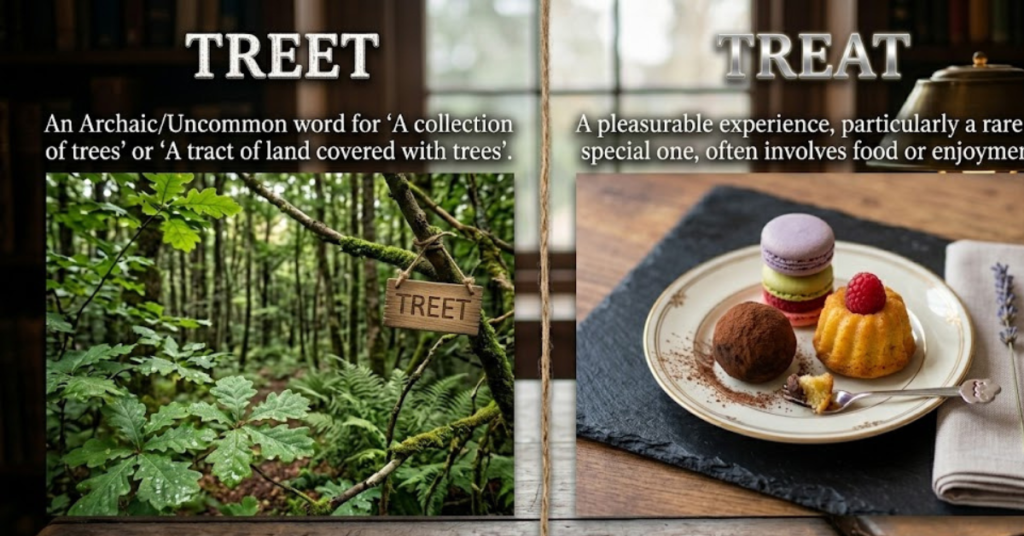

English spelling mistakes are more common than most people realize, especially when two words sound nearly identical. One example that often confuses writers is treet vs treat. At first glance, both words may seem acceptable, but they actually have very different meanings and levels of usage in English.
If you have ever questioned the treet vs treat meaning or wondered which version belongs in proper writing, this guide will explain everything clearly. We’ll cover definitions, spelling differences, common mistakes, real-world usage, and easy tricks to remember the correct form.
Treet vs Treat: Which One Is Correct?
In standard English, “treat” is the correct and commonly used word.
“Treet” is far less common and is usually either:
- A misspelling of “treat”
- A brand name
- A dialect or slang variation in certain contexts
For most everyday writing, “treat” is the word you want.
Correct Examples
- That dessert was a real treat.
- We decided to treat ourselves to dinner.
- She treats everyone kindly.
Incorrect Examples in Standard Writing
- Let’s have a treet.
- That cake was a treet.
Unless referring to a proper name or specific product, “treet” is generally considered incorrect.
Treet vs Treat Meaning
Understanding the meanings separately helps clear up the confusion.
Meaning of Treat
The word “treat” has several meanings in English.
As a Noun
A treat is something enjoyable or special.
Examples:
- Ice cream is a sweet treat.
- The vacation was a real treat.
As a Verb
To treat means:
- To behave toward someone in a certain way
- To provide something special
- To medically care for a condition
Examples:
- Treat people with respect.
- Doctors treat patients.
- He treated his friends to lunch.
Meaning of Treet
“Treet” is not commonly recognized as a standard English word. However, it does appear in a few specific situations:
- Brand names
- Regional dialect spellings
- Internet slang or typing mistakes
This explains the confusion around treet vs treat meaning online.
Why People Mistype “Treat” as “Treet”
Several factors contribute to this common spelling mistake.
Pronunciation Similarities
In some accents, “treat” may sound closer to “treet,” especially during fast speech.
Typing Habits
People often type words the way they sound, especially in casual texting or social media posts.
Autocorrect and Informal Language
Repeated informal use can make incorrect spellings appear more familiar over time.
The Origin of the Word “Treat”
The word “treat” comes from the Latin word “tractare,” meaning to manage or handle. Over centuries, the meaning expanded into hospitality, kindness, and enjoyment.
Today, “treat” is one of the most versatile words in English because it functions as both a noun and a verb.
Common Uses of “Treat”
The word appears in many everyday expressions and situations.
Food and Desserts
People often call sweets or favorite snacks “treats.”
Examples:
- Chocolate treat
- Birthday treat
- Frozen treat
Self-Care and Rewards
The phrase “treat yourself” became especially popular online and in advertising.
It usually means rewarding yourself with something enjoyable.
Medical Use
Doctors and healthcare professionals use “treat” when discussing illness or recovery.
Example:
- Antibiotics treat infections.
Is “Treet” Ever Correct?
Although uncommon, “Treet” may appear as:
- A product name
- A surname
- A fictional name
- A regional pronunciation spelling
Outside of these niche cases, standard English almost always favors “treat.”
Common Expressions Using “Treat”
English includes many phrases built around the word.
Treat Yourself
Reward yourself with something enjoyable.
A Real Treat
Something especially enjoyable or memorable.
Treat With Respect
Behave kindly or fairly toward someone.
No Treat
A humorous way to describe something unpleasant.
Easy Tricks to Remember the Correct Spelling
If you struggle with remembering whether to write “treet” or “treat,” these simple tips can help.
Think About “Eat”
The word “treat” contains “eat,” which makes sense because many treats are food-related.
Remember Common Phrases
You have probably seen:
- Trick or treat
- Treat yourself
- Sweet treat
Repeated exposure reinforces the correct spelling naturally.
Common Grammar Mistakes Related to Treat
Confusing Noun and Verb Usage
“Treat” can function differently depending on the sentence.
Examples:
- Noun: “The cookies were a treat.”
- Verb: “They treated us kindly.”
Overusing Informal Spellings
Using “treet” in professional or academic writing may appear careless.
Why Correct Spelling Matters
Proper spelling improves:
- Reader trust
- Professional writing quality
- Search engine performance
- Academic credibility
- Communication clarity
Even small spelling mistakes can affect how polished your content appears.
FAQs
What is the difference between treet and treat?
“Treat” is the correct standard English word. “Treet” is usually a misspelling or a specific brand name.
Is treet a real word?
“Treet” may appear as a brand or proper name, but it is not commonly used in standard English vocabulary.
How do you spell treat correctly?
The correct spelling is “treat.”
What does treat mean?
“Treat” can mean something enjoyable, special, or the act of caring for or rewarding someone.
Why do people spell treat as treet?
The confusion often comes from pronunciation and typing words based on sound.
Is trick or treet correct?
No. The correct phrase is “trick or treat.”
Conclusion
The confusion surrounding treet vs treat is understandable because both spellings sound very similar when spoken aloud. However, “treat” is the proper and widely accepted spelling in standard English. It can describe enjoyable experiences, rewards, kindness, or medical care depending on the context.
While “treet” may occasionally appear as a brand name or informal variation, it is not the correct choice for most writing situations. Knowing the difference helps improve your grammar, writing confidence, and overall communication skills.