
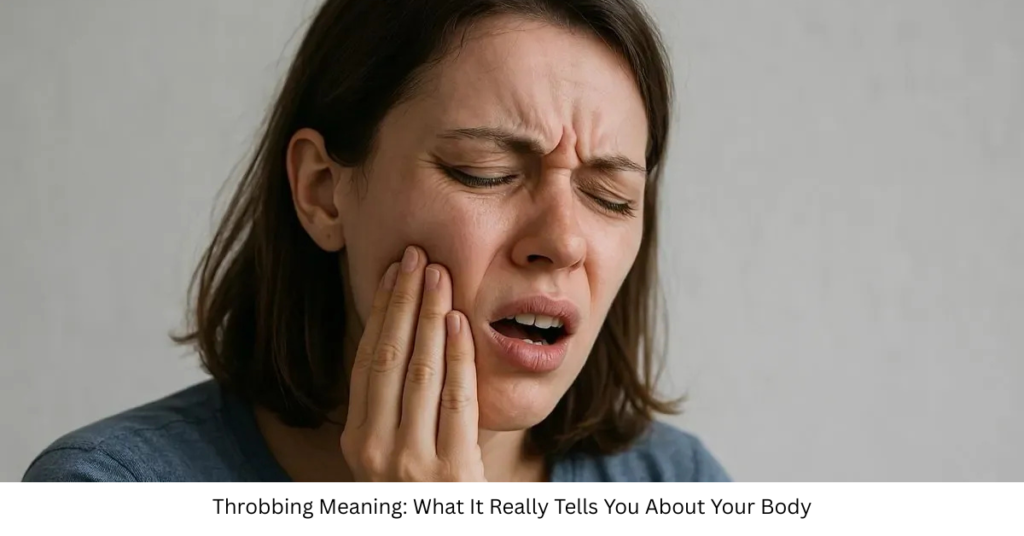

Ever felt a rhythmic pulsing pain somewhere in your body and wondered what it means? The throbbing meaning often goes beyond simple discomfort—it can signal how your body reacts to pain, inflammation, or even emotional stress.
In everyday language, “throbbing” describes a repeated beating or pulsating sensation. But medically, it can point to underlying conditions that shouldn’t be ignored. In this article, we’ll break down what throbbing means, why it happens, and what different types of throbbing sensations may indicate.
What Does Throbbing Mean?
At its core, throbbing refers to a pulsating sensation that often matches your heartbeat. It usually occurs when blood flow increases to a specific area due to inflammation, injury, or infection.
Key characteristics of throbbing:
- Rhythmic or pulsing pain
- Often synchronized with your heartbeat
- Can vary from mild discomfort to severe pain
- Common in inflamed or injured tissues
Throbbing Meaning in Medical Terms
The throbbing meaning medical context is closely linked to increased blood circulation and nerve sensitivity. When tissues are damaged or irritated, blood vessels expand, causing that pulsing sensation.
Common medical causes include:
- Inflammation
- Infection
- Injury or trauma
- Nerve irritation
- Increased blood pressure in localized areas
Types of Throbbing Sensations and What They Indicate
Head Throbbing Meaning
A throbbing headache is one of the most common experiences.
Possible causes:
- Migraines
- Tension headaches
- Sinus infections
- High blood pressure
If the pain is severe, persistent, or accompanied by nausea or vision issues, it’s worth consulting a doctor.
Heart Throbbing Meaning
The sensation of your heart pounding or throbbing can feel alarming.
It may be linked to:
- Anxiety or panic attacks
- Physical exertion
- Irregular heartbeat (arrhythmia)
- High caffeine intake
Occasional episodes are normal, but frequent or intense symptoms should be medically evaluated.
Breast Throbbing Meaning
Throbbing in the breast area can vary depending on age and health conditions.
Common reasons include:
- Hormonal changes (especially during menstruation)
- Pregnancy-related changes
- Breast infections (mastitis)
- Muscle strain
Persistent or unusual pain should always be checked to rule out serious conditions.
Ear Throbbing Meaning
A pulsating feeling in the ear can be uncomfortable and sometimes confusing.
Possible causes:
- Ear infections
- Sinus pressure
- Tinnitus (pulsatile type)
- Blood vessel issues near the ear
If the throbbing is continuous or affects hearing, seek medical advice.
Body Throbbing Meaning
Generalized throbbing across the body may feel like soreness or deep pulsing discomfort.
This can be due to:
- Muscle fatigue after exercise
- Viral infections (like flu)
- Inflammation
- Circulatory issues
Rest, hydration, and proper care usually help, but prolonged symptoms need attention.
Why Does Throbbing Feel So Intense?
Throbbing pain often feels stronger than other types because it involves both nerve signals and blood vessel activity. When these two systems interact, the brain interprets it as a more noticeable sensation.
When Should You Be Concerned?
Not all throbbing is dangerous, but some signs shouldn’t be ignored.
Seek medical help if:
- The pain is severe or worsening
- It lasts longer than a few days
- It’s accompanied by fever, dizziness, or swelling
- You experience sudden, unexplained throbbing
How to Relieve Throbbing Pain
Here are some simple ways to manage mild throbbing:
Home remedies:
- Apply a cold or warm compress
- Stay hydrated
- Get enough rest
- Practice relaxation techniques
Medical treatments:
- Over-the-counter pain relievers
- Antibiotics (if infection is present)
- Prescription medications for chronic conditions
FAQs About Throbbing Meaning
What does throbbing pain usually indicate?
It typically indicates increased blood flow or inflammation in a specific area of the body.
Is throbbing pain serious?
Not always. It can be mild and temporary, but persistent or severe throbbing may require medical attention.
Why does my head feel like it’s throbbing?
This is often linked to migraines or tension headaches, where blood vessels in the brain expand.
Can anxiety cause a throbbing sensation?
Yes, anxiety can lead to heart pounding or even throbbing sensations in different parts of the body.
How do I stop throbbing pain quickly?
Rest, hydration, and cold compresses can help. Pain relief medication may also be effective if needed.
Conclusion
Understanding the throbbing meaning helps you better interpret what your body is trying to tell you. Whether it’s a headache, ear discomfort, or a pulsing sensation in your chest, throbbing often signals increased blood flow or inflammation.
Most of the time, it’s harmless and temporary. But paying attention to patterns and severity is key. If something feels off or persistent, don’t ignore it—your body might be asking for help.
For more health-related insights, keep exploring and stay informed about the signals your body sends every day.