
Ever typed gnaw or knaw and paused, unsure which one looks right? You’re not alone. English spelling can be tricky, especially with silent letters and unusual word patterns.
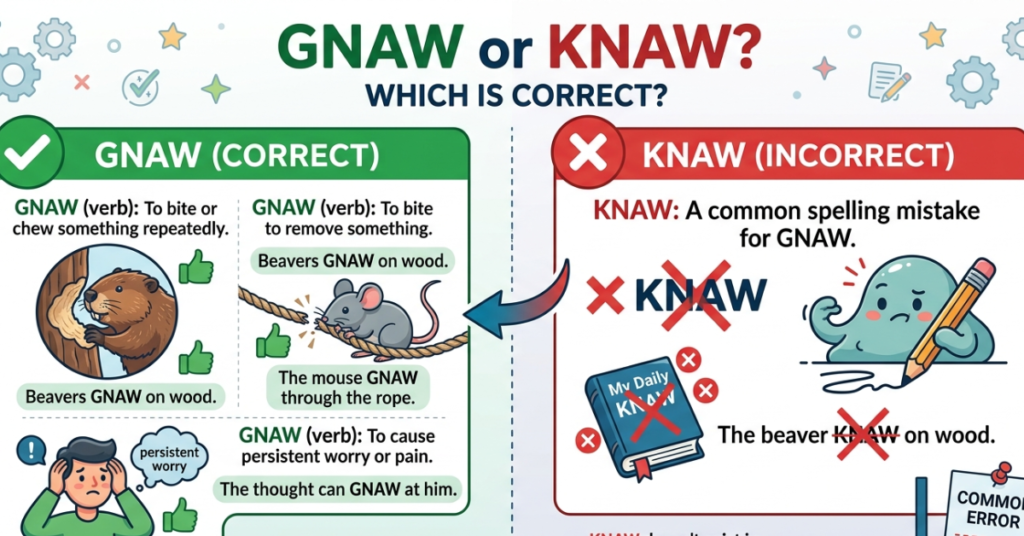
Let’s settle it quickly: “gnaw” is the correct spelling, while “knaw” is incorrect in standard English. But there’s more to learn—especially if you want to use the word naturally and confidently.
Gnaw or Knaw: The Correct Answer
If you’re wondering which one to use, here’s the simple breakdown:
Correct:
- gnaw
Incorrect:
- knaw
So anytime you need this word in writing, stick with gnaw.
What Does “Gnaw” Mean?
Understanding the meaning helps you remember the correct form.
Gnaw definition:
“Gnaw” means:
- To bite or chew something repeatedly
- To wear something down slowly
- To cause persistent worry or discomfort (figuratively)
Examples:
- “The dog is gnawing on a bone.”
- “Doubt began to gnaw at his confidence.”
It can describe both physical and emotional actions.
Why “Knaw” Is Incorrect
At first glance, “knaw” might seem logical—especially since English has words like “know” and “knee.”
But here’s the key point:
- “Gnaw” comes from older forms of English where the “g” is silent
- The spelling has stayed consistent over time
So while “knaw” might look right, it’s not recognized in standard English.
Pronunciation Made Simple
One reason people confuse gnaw or knaw is pronunciation.
How to say “gnaw”:
- Pronounced like: “naw”
The “g” is silent, just like:
- gnome
- gnash
Once you hear it, the spelling becomes easier to remember.
Common Uses of “Gnaw” in Sentences
Here are some everyday examples to show how it’s used:
Literal (physical):
- “The puppy kept gnawing on the furniture.”
- “Rats can gnaw through wood and plastic.”
Figurative (emotional):
- “A feeling of guilt began to gnaw at her.”
- “Uncertainty continued to gnaw at his mind.”
This flexibility makes “gnaw” a powerful word in both casual and formal writing.
Synonyms for “Gnaw”
If you want variety in your writing, here are some alternatives:
Physical context:
- Chew
- Bite
- Nibble
Figurative context:
- Trouble
- Bother
- Eat away at
Each option carries a slightly different tone, so choose based on context.
Quick Spelling Tip to Remember
Struggling to remember gnaw or knaw? Try this simple trick:
Think of “gnaw” starting with “gn” like “gnome.”
Even though the “g” is silent, it’s always part of the spelling.
Common Mistakes to Avoid
Here are a few errors people often make:
Incorrect:
- knawing on a bone
- he felt it knaw at him
Correct:
- gnawing on a bone
- he felt it gnaw at him
Once you remember the correct form, these mistakes are easy to avoid.
FAQs About Gnaw or Knaw
1. Is it gnaw or knaw?
The correct spelling is gnaw.
2. What does “gnaw” mean?
It means to chew repeatedly or to cause persistent worry.
3. Why is “knaw” incorrect?
Because it’s not recognized in standard English spelling.
4. How do you pronounce “gnaw”?
It’s pronounced “naw” with a silent “g.”
5. Can “gnaw” be used figuratively?
Yes, it can describe emotional or mental discomfort.
Final Thoughts: Stick With “Gnaw”
So, gnaw or knaw—what’s the final answer? It’s always “gnaw.” Even though the spelling might look unusual, it follows a consistent pattern in English.
Once you understand the meaning, pronunciation, and usage, this word becomes much easier to handle. The next time you write it, you’ll know exactly which version is correct—no second guessing needed.
Want to sharpen your spelling even more? Keep exploring these commonly confused words—they’re the key to clearer, more confident writing.