
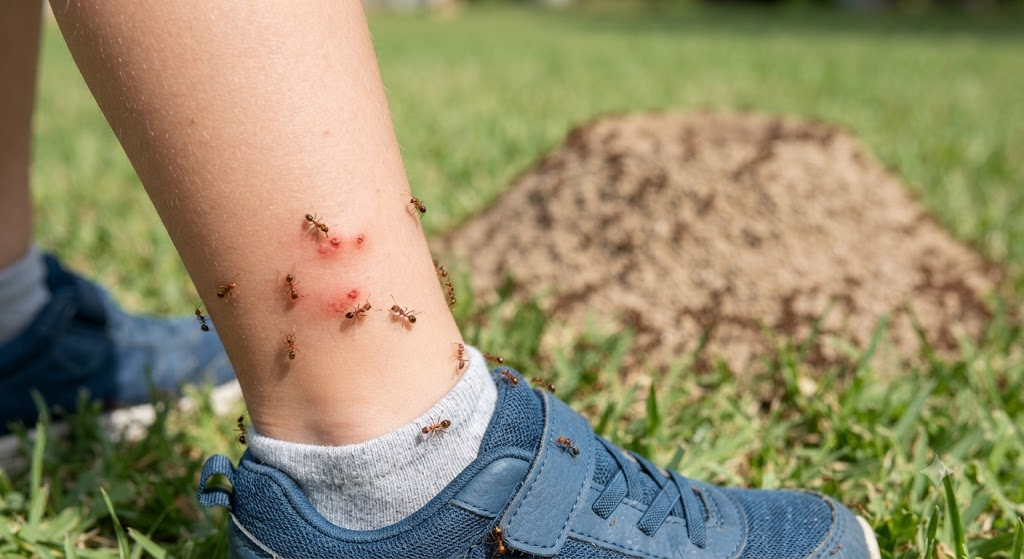

Fire Ant Bites are tiny, reddish-brown insects that live in large dirt mounds. They are famous for being very protective of their homes. If you accidentally step on their mound, they quickly crawl up your skin and bite you. When you feel a sharp pinch, that is actually the fire ant biting to get a grip. Then, they use their stinger to inject a special liquid. This liquid is what causes the intense burning feeling that gives them their name. Being aware of where you step in the grass can help you stay safe from these busy little insects while playing outside.
How to Recognize Fire Ant Bites Quickly
You can usually tell if you have fire ant bites by the way they look and feel. At first, you will notice a sharp, stinging pain that feels like a burn. Within just a few minutes, small red bumps will appear on your skin. These bumps often turn into white, pus-filled blisters within a day or so. Because these ants usually attack in a group, you might see many bites clustered together in a small area. If you notice this pattern on your legs or feet, it is a very strong sign that you have encountered these aggressive ants.
Why Fire Ant Bites Burn So Much
The reason fire ant bites feel so painful is due to the chemical they inject into your skin. This substance is called solenopsin. It is a type of venom that triggers your body’s pain sensors immediately. While most people just feel a temporary sting, the area often starts to itch intensely after the pain fades. This itching can last for several days. It is very important to try your best not to scratch these spots. Scratching can break the skin, which might lead to a painful bacterial infection that takes much longer to heal than the original sting.
Immediate Steps to Take After Being Stung
If you realize you are covered in ants, stay calm and move away from the mound immediately. Brush the ants off your skin quickly with your hand or a cloth. Do not try to wash them off with water, as this can make them sting more. Once you are safe, wash the area gently with mild soap and cool water. Keeping the skin clean helps prevent germs from entering the tiny holes caused by the bites. If you have the supplies, applying a cold pack can help lower the swelling and provide some quick relief from the burning sensation.
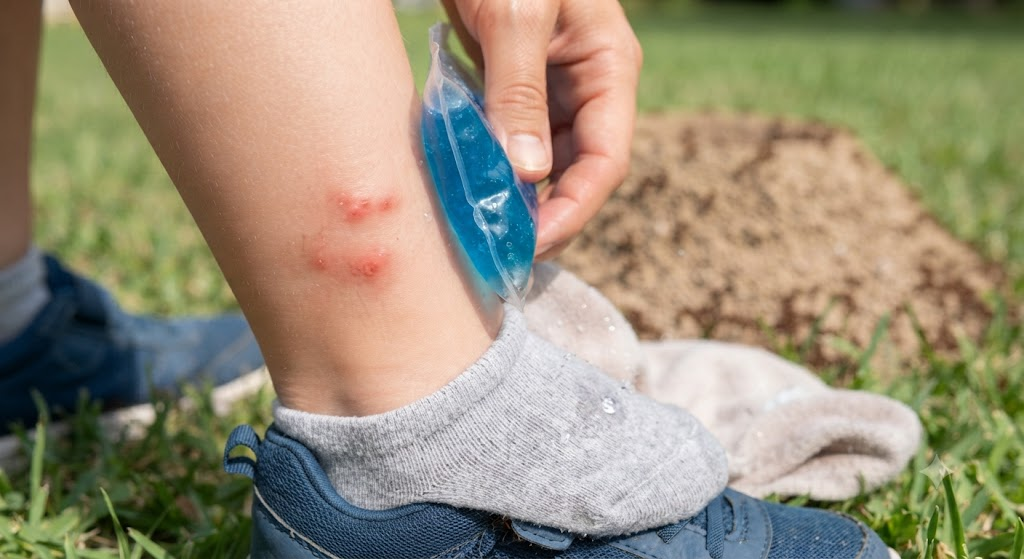
Best Ways to Treat Fire Ant Bites at Home
Most people can easily treat fire ant bites at home without needing a doctor. To stop the itch, you can use an over-the-counter hydrocortisone cream. This is very good for calming down red, irritated skin. If the bites are very itchy, an oral antihistamine might also help you feel better. Many people find that a paste made of baking soda and a little bit of water helps soothe the pain. Just dab a tiny bit on each bite. Remember to keep the blisters clean and dry, and try to wear loose clothing so nothing rubs against the irritated skin.
When Should You See a Doctor?
While most bites are just a nuisance, some people have serious reactions. If you ever feel dizzy, have trouble breathing, or notice swelling in your throat or tongue, get help right away. This is a sign of a severe allergic reaction that needs emergency care. Also, watch the bites closely for a few days. If the area around the fire ant bites starts to look very red, feels hot to the touch, or if you see spreading yellow pus, it could be infected. In these cases, it is much safer to visit a doctor or a local clinic for professional treatment.
Common Myths About Treating Bites
There are many old stories about how to treat these bites, but many do not work. Some people suggest using nail polish or vinegar, but these can actually hurt your skin more. You should never try to pop the blisters, as this opens the door for germs to enter your body. Another common mistake is using harsh chemicals that can cause a rash. Always stick to simple, proven methods like cold packs and mild creams. If you are unsure what to use, a quick chat with a pharmacist is always a smarter choice than trying an unproven trick.
Protecting Your Family from Future Bites
Prevention is always the best way to handle these pests. When you are out in the yard, always wear closed-toe shoes and socks to protect your feet. If you see a large, mounded pile of dirt in the grass, stay far away from it. Teach children to spot these mounds so they do not accidentally step on them during playtime. If you have pets, check your yard regularly for new mounds. Keeping your lawn well-maintained can also discourage ants from building their homes right where you like to relax and play with your family.
Understanding the Life Cycle of Fire Ants
Fire ants are fascinating but stubborn creatures. They live in massive colonies underground, often with a queen leading the way. They are very active during the warmer months, which is why you see more fire ant bites in the summer. They prefer open, sunny areas where they can easily find food. Because they can rebuild their mounds very quickly after a rainstorm, it is important to stay alert all summer long. Knowing their habits helps you understand why they are so protective and why avoiding their territory is the best way to prevent a painful encounter.
Natural Remedies to Soothe the Sting
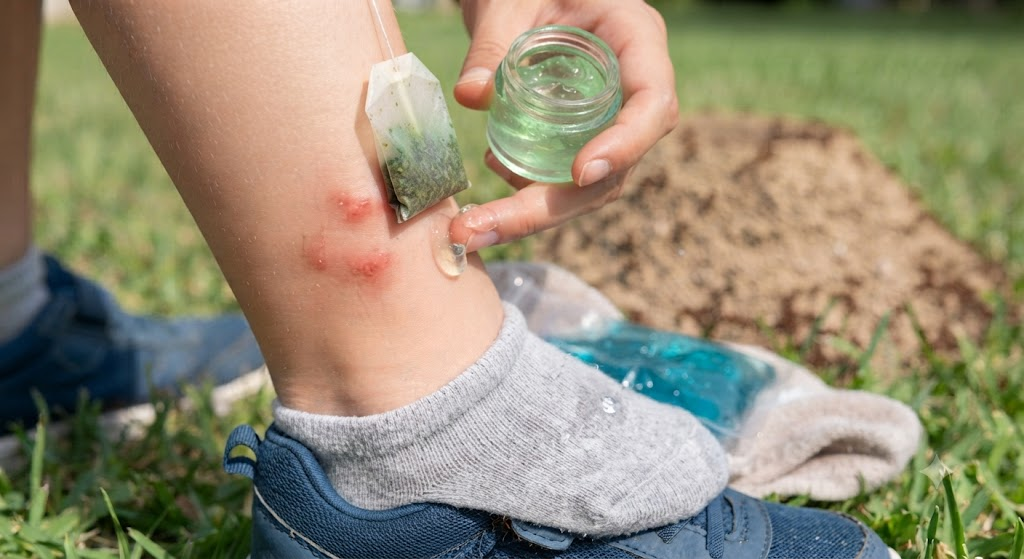
If you prefer natural options, there are a few gentle ways to help your skin feel better. Aloe vera gel is famous for its cooling effects on the skin and can work well on fire ant bites. Another popular choice is using a cool, damp tea bag placed directly on the bite for a few minutes. The natural properties in tea can sometimes help draw out some of the irritation. Just remember that these natural remedies are for mild cases. If the pain feels like it is getting worse rather than better, it is time to switch to traditional medical creams.
Conclusion
Dealing with fire ant bites is never fun, but it is a normal part of spending time outdoors. By staying alert, keeping your skin covered, and knowing how to treat the stings properly, you can still enjoy your time in the sun. Always remember to keep the area clean and avoid the temptation to scratch those itchy spots. With just a little bit of care and patience, your skin will heal up in no time. Stay aware of your surroundings, and you will have many more happy, bite-free days ahead of you in the great outdoors.
Frequently Asked Questions
1. How long do fire ant bites usually last?
Most bites will start to feel better after a few days, but the little blisters can last for up to a week.
2. Can I use vinegar on a bite?
No, it is best to avoid vinegar. It can irritate your skin and might not actually stop the burning or itching.
3. Do fire ants bite or sting?
They do both! They bite to get a firm grip and then use their stinger to inject the painful venom.
4. Are fire ant bites dangerous for kids?
Usually, they are just painful and itchy. However, watch for signs of allergies like trouble breathing, which requires immediate medical help.
5. Should I break the blisters?
Never pop the blisters. Breaking them can lead to a serious skin infection that will be much harder to treat.
6. Do these ants live everywhere?
Fire ants mostly live in warmer areas. If you live in a place with cold winters, you might see fewer of them.
Have you ever had a run-in with these tiny, fiery insects?
Share your own tips for staying comfortable in the comments below, or let us know if you have a favorite way to keep your yard ant-free!