
You’ve probably seen both spellings—molding and moulding—and wondered which one is actually correct. If you’re asking molding or moulding, the answer isn’t as complicated as it seems.
The difference comes down to regional spelling, not meaning. Whether you’re talking about home décor, manufacturing, or shaping clay, both versions refer to the same concept. In this guide, we’ll break down when to use each spelling, along with real-world examples to make things crystal clear.
Molding or Moulding: What’s the Difference?
At their core, both words mean the same thing:
- The process of shaping material into a specific form
- Decorative trim used in architecture and interiors
The only difference is spelling based on location:
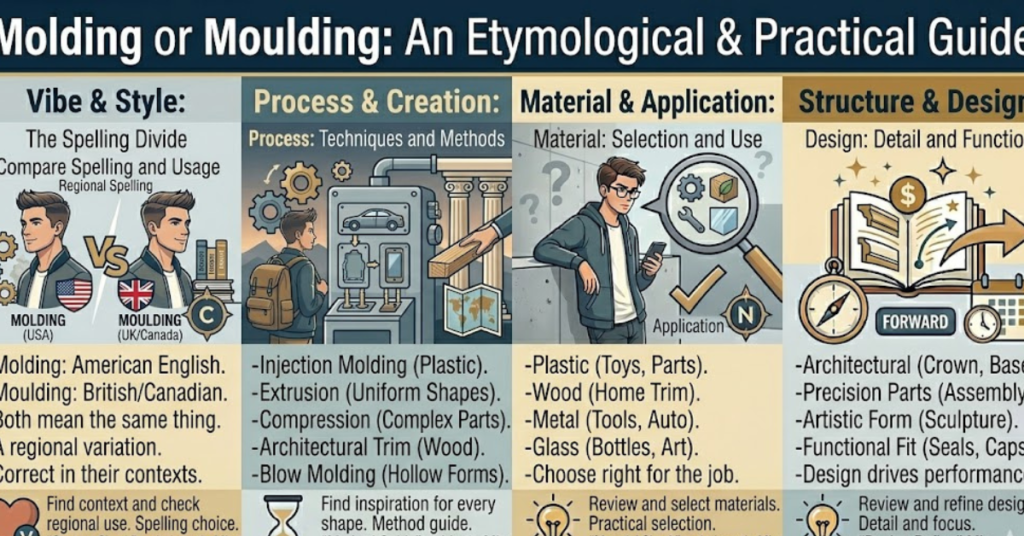
- Molding is used in American English
- Moulding is used in British English
So if you’re wondering which is correct molding or moulding, the answer is: both are correct—it depends on where you are or which style you follow.
Molding or Moulding UK vs US Usage
Understanding regional usage makes everything easier.
American English
- Molding
- Color
- Favorite
British English
- Moulding
- Colour
- Favourite
In molding or moulding UK contexts, “moulding” is the preferred spelling, while American audiences expect “molding.”
Common Uses in Construction and Interior Design
One of the most common places you’ll see this word is in home design.
Crown Molding or Moulding
This decorative trim is installed where walls meet ceilings.
- In the US: crown molding
- In the UK: crown moulding
So if you’re asking is it crown molding or moulding, both are correct depending on your audience.
Types of Trim Molding
Different types of trim include:
- Baseboard (floor molding or moulding)
- Shoe molding
- Door and window trim
- Decorative wall panels
Whether you write molding or moulding trim, the meaning stays the same.
Molding or Moulding in Manufacturing
The term is also widely used in industrial settings.
Plastic and Injection Molding
- Injection molding or moulding refers to shaping plastic by injecting it into molds
- Common in automotive, packaging, and electronics industries
Wood and Clay Applications
- Wood molding or moulding is used for furniture and décor
- Clay molding or moulding involves shaping pottery or sculptures
No matter the material, the spelling difference is purely regional.
Molding or Moulding as a Verb
The word isn’t just a noun—it can also describe an action.
Shaping Objects
- Molding clay into a sculpture
- Moulding plastic into parts
Shaping People or Behavior
- Teaching and guiding someone’s character
- Influencing habits or thinking
In this sense, molding or moulding a person means shaping their development or personality over time.
Quick Guide: When to Use Each Spelling
To keep things simple:
- Use molding if you’re writing for American audiences
- Use moulding if your audience follows British English
- Stay consistent within your content
If you’re still unsure about molding or moulding which is correct, just match the spelling style of your region or platform.
Common Mistakes to Avoid
Even though the difference is simple, people often make small errors:
- Mixing both spellings in the same document
- Assuming one is incorrect (both are valid)
- Using the wrong version for your target audience
Consistency is more important than the choice itself.
FAQs
Is it molding or moulding?
Both are correct. “Molding” is American English, while “moulding” is British English.
Which spelling should I use?
Use the version that matches your audience or region.
Is there any difference in meaning?
No, both words have the same meaning in all contexts.
Is it crown molding or moulding?
Both are correct, depending on whether you’re using US or UK spelling.
Can I use both spellings in one article?
It’s best to stick to one for consistency and clarity.
Conclusion
The debate over molding or moulding isn’t really about right or wrong—it’s about where you are and who you’re writing for. Both spellings are correct, widely accepted, and used in everyday language across different industries.
The key takeaway is simple: choose one style, stay consistent, and match your audience’s expectations. Once you understand this, you’ll never second-guess the spelling again.