
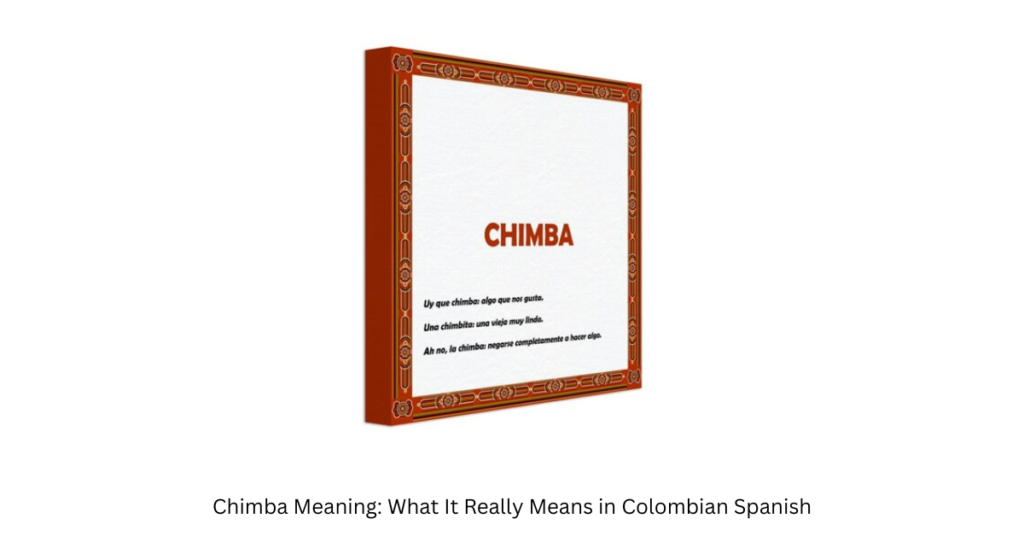

If you’ve ever heard someone say chimba and wondered what it means, you’re not alone. The chimba meaning can be confusing because it changes depending on context, tone, and region—especially in Colombia.
In this guide, we’ll break down what the word means, how locals actually use it, and why it’s one of the most popular slang terms in Colombian Spanish.
What Does Chimba Mean?
At its core, chimba meaning varies between positive and negative depending on how it’s used.
Common meanings include:
- Something awesome or cool (most common use)
- Something bad or annoying (less common, depends on tone)
- A vulgar reference (in certain contexts)
In everyday conversation, especially among young people, it usually means something really good or impressive.
Chimba Meaning in Colombia
When discussing chimba meaning Colombia, context is everything. In cities like Medellín and Bogotá, the word is widely used in casual speech.
Example:
- “Ese carro está una chimba”
That car is amazing
Here, una chimba meaning clearly refers to something positive.
However:
- “Ni por la chimba voy”
No way I’m going
This shows a completely different tone—more like refusal or emphasis.
Qué Chimba Meaning Explained
You’ll often hear people say qué chimba, which is one of the most common expressions.
Qué chimba meaning:
- “That’s awesome!”
- “So cool!”
- “Amazing!”
It’s used to express excitement or admiration.
La Chimba Meaning & Variations
The phrase la chimba meaning depends heavily on how it’s used.
Common variations:
- La chimba → Can mean “no way” or “not happening”
- Es una chimba meaning → Something is really good
- Que chimba meaning Colombia → Expression of excitement
Cara de Chimba Meaning
This phrase is more slang-heavy and can sometimes be offensive.
Cara de chimba meaning:
- Literally refers to someone’s face
- Can imply attitude or sarcasm
- Sometimes used jokingly among friends
Use this carefully, as tone matters a lot.
Chimba Meaning in English
There is no single direct translation, but the closest equivalents for chimba meaning in English include:
- Awesome
- Cool
- Great
- Damn (depending on tone)
In negative contexts:
- No way
- Not at all
Is Chimba a Bad Word?
Yes—and no.
Here’s the truth:
- Originally, it had a vulgar meaning
- Today, it’s widely used as slang
- Among friends, it’s usually harmless
- In formal settings, avoid it
Think of it like casual slang that depends on who you’re talking to.
When Should You Use Chimba?
Safe situations:
- Talking with friends
- Casual conversations
- Social media captions
Avoid using it:
- In professional settings
- Around elders (depending on culture)
- In formal writing
Why Is Chimba So Popular?
The reason chimba meaning slang has spread so widely is simple:
- It’s expressive
- It’s versatile
- It reflects Colombian culture
- It’s commonly used in music and social media
You’ll even hear phrases like:
- “Medellín es una chimba” (Medellín is amazing)
FAQs About Chimba Meaning
1. What is chimba meaning in Spanish?
It’s a Colombian slang word that can mean something great, surprising, or sometimes negative depending on context.
2. What does qué chimba mean?
It means “that’s awesome” or “how cool,” used to show excitement.
3. Is chimba offensive?
It can be, depending on tone and context. Originally vulgar, but now often casual slang.
4. What is una chimba meaning?
It usually means something really good or impressive.
5. How do Colombians use chimba?
Mostly in informal conversations to describe something exciting, cool, or surprising.
Conclusion
Understanding the chimba meaning is all about context. In most modern conversations, it’s a fun and expressive way to say something is amazing—but it still carries cultural nuance.
If you’re learning Spanish or exploring Colombian slang, this is definitely a word worth knowing—but use it wisely.
Want to learn more slang like this? Keep exploring and you’ll start sounding like a local in no time.