
If you’ve ever heard someone shout “Banzai!” in a movie or documentary, you might have wondered what it actually means. The banzai meaning goes far beyond a simple cheer—it carries deep cultural, historical, and linguistic significance rooted in Japan.
In this article, we’ll break down what “banzai” really means, how it was used in different contexts (including World War II), and how its meaning has evolved over time. Whether you’re curious about language, history, or pop culture, this guide will give you a clear and engaging understanding.
What Does Banzai Mean?
At its core, the banzai meaning in English is “ten thousand years” or “long life.” It comes from the Japanese phrase:
- “Ban” (万) = ten thousand
- “Zai” (歳) = years
Together, “banzai” expresses a wish for longevity and prosperity—similar to saying “long live!”
Simple Translation:
- Banzai meaning in Japanese: “Ten thousand years”
- Banzai meaning in English: “Long live” or “Hooray”
It’s commonly used as a celebratory cheer, especially in group settings.
Historical Roots of Banzai
Ancient Japan Usage
Originally, “banzai” was used to show respect and admiration, especially toward emperors or leaders. People would shout it during ceremonies to wish them a long and prosperous life.
Tenno Heika Banzai Meaning
A more formal version of the phrase is:
“Tenno Heika Banzai”
This translates to:
- “Long live His Majesty the Emperor”
This chant became especially prominent in Japanese military culture.
Banzai Meaning in World War II
During World War II, the phrase took on a more intense and emotional tone.
The “Banzai Charge”
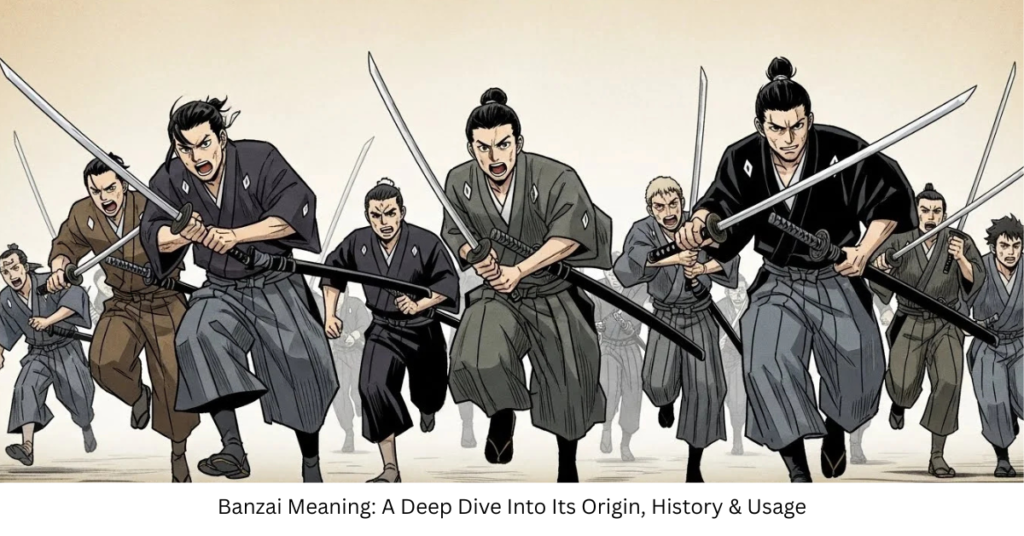
Japanese soldiers would shout “Banzai!” before launching a final attack, often knowing it could be their last.
This led to associations such as:
- Courage and loyalty
- Sacrifice for the nation
- Extreme determination
Important Note:
The banzai meaning WW2 context is very different from its original positive usage. While it once symbolized celebration, it became linked with wartime aggression and nationalism.
Banzai vs Kamikaze: Are They the Same?
Many people confuse these terms, but they are different.
Key Differences:
- Banzai: A cheer or chant meaning “long live”
- Kamikaze: Refers to suicide missions by pilots during WWII
The kamikaze banzai meaning confusion comes from both being used in wartime Japan, but they are not interchangeable.
Modern Usage
Today, the word has largely returned to a lighter, more positive tone.
Common Uses Today:
- Celebrations or festivals
- Sporting events
- Casual expressions of excitement
In modern Japan, shouting “Banzai!” is similar to saying:
- “Hooray!”
- “Cheers!”
Meaning in Different Languages
Interestingly, people often search for how the term translates globally.
Examples:
- Banzai meaning in Hindi: लंबे जीवन की कामना (Long life wish)
- Banzai meaning in Tagalog: Mabuhay (similar idea of “long live”)
- Banzai meaning in Swahili: Ishi milele (live forever)
While translations vary, the core idea remains the same—celebrating life and longevity.
Banzai in Pop Culture
The term has also made its way into movies, books, and entertainment.
Example:
- Buckaroo Banzai Meaning: Refers to a fictional character (Dr. Buckaroo Banzai), blending science fiction with humor. Here, “Banzai” adds a quirky, energetic vibe rather than its original meaning.
Why Understanding it Matters
Knowing the banzai meaning in Japanese helps you:
- Avoid misunderstandings in cultural contexts
- Appreciate its historical depth
- Use it correctly in conversation or writing
It’s a great example of how a single word can evolve over time.
FAQs
1. What does “banzai” literally mean?
It literally means “ten thousand years,” symbolizing a wish for long life.
2. Is “banzai” offensive?
Not inherently. However, in WWII contexts, it may carry sensitive historical associations.
3. What is “Tenno Heika Banzai”?
It means “Long live the Emperor” and was historically used in Japan.
4. Is “banzai” still used today?
Yes, but mainly in a positive and celebratory way.
5. Is banzai the same as kamikaze?
No, they are completely different terms with different meanings.
Conclusion
The banzai meaning is a fascinating blend of language, history, and culture. From its origins as a respectful wish for long life to its intense use during World War II, and finally to its modern celebratory tone, the word has gone through a remarkable evolution.
Understanding its context helps you use it appropriately and appreciate its cultural significance. If you’re exploring Japanese language or history, “banzai” is a great place to start.
Want to learn more about cultural phrases and their meanings? Keep exploring—you’ll be surprised how much depth a single word can hold!