
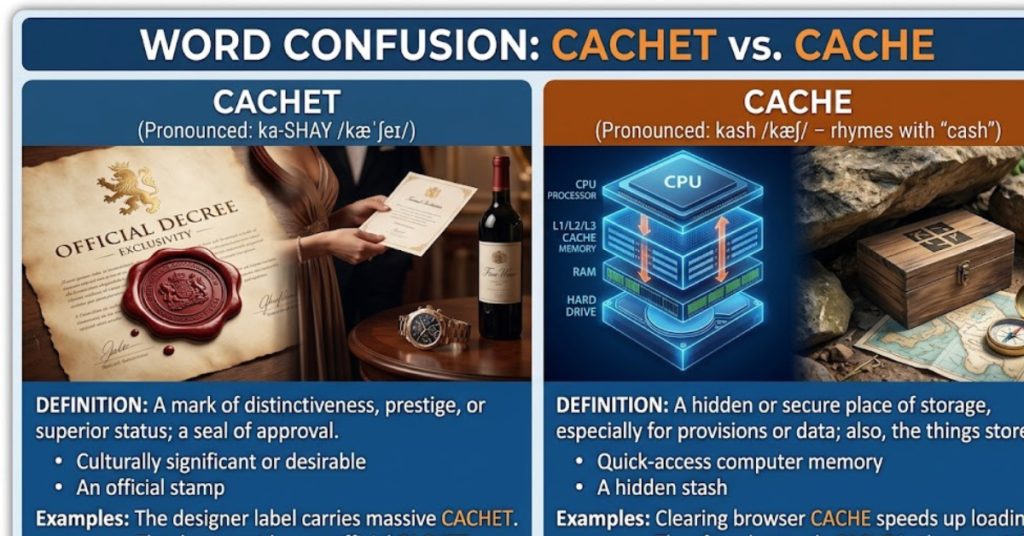

English is full of words that look similar but carry entirely different meanings. One pair that often causes confusion is cachet vs cache. At first glance, these words seem related because of their similar spelling and French origins. However, they refer to very different concepts.
Understanding the cachet vs cache distinction can help you write more accurately and communicate with confidence. Whether you’re discussing social prestige, computer technology, hidden supplies, or luxury branding, choosing the correct word matters. In this guide, we’ll break down the meanings, usage, examples, and common mistakes associated with cachet vs caché and explain when to use each term.
Cachet vs Cache: Quick Overview
Let’s start with a simple comparison.
Cachet
Cachet refers to prestige, status, distinction, or a mark of authenticity.
Example:
- “The luxury brand carries significant cachet among collectors.”
Cache
Cache refers to a hidden storage place or stored data that can be accessed quickly.
Examples:
- “The hikers discovered a cache of supplies.”
- “Clear your browser cache to improve performance.”
Although they share a similar appearance, their meanings are completely unrelated in modern English.
What Does Cachet Mean?
The word cachet originated from French and originally referred to an official seal or stamp used to authenticate documents.
Today, cachet is most commonly used to describe:
- Prestige
- Social status
- Exclusivity
- Reputation
- Distinction
Examples of Cachet in a Sentence
- The award added considerable cachet to her career.
- Owning a vintage sports car brings a certain cachet.
- The restaurant gained cachet after receiving industry recognition.
- The neighborhood’s cachet attracted wealthy buyers.
In each case, cachet refers to reputation, admiration, or elevated status.
What Does Cache Mean?
The word cache also comes from French, meaning “to hide.”
In modern English, cache has two primary meanings:
Hidden Storage
A cache can be a secret collection of items stored for future use.
Examples:
- Explorers discovered a cache of gold coins.
- Emergency supplies were kept in a hidden cache.
- The archaeologists found a cache of ancient artifacts.
Computer Storage
In technology, a cache stores data temporarily for faster access.
Examples:
- Clear your browser cache regularly.
- The system cache improved loading speed.
- Cached files reduce website loading times.
This technological meaning is the most common use today.
Cachet vs Cache Difference Explained
The easiest way to understand the difference is to focus on context.
Cachet = Prestige
Think of:
- Reputation
- Status
- Exclusivity
- Recognition
Example:
“Graduating from a prestigious university carries cachet.”
Cache = Storage
Think of:
- Hidden items
- Stored data
- Temporary memory
- Concealed supplies
Example:
“The browser cache helps websites load faster.”
What About Cachet vs Caché?
The phrase cachet vs caché often appears in online searches because people encounter the accented spelling “caché.”
What Does Caché Mean?
In French, caché means “hidden.”
In English, however, caché is rarely used outside specialized contexts or direct French references.
Most English dictionaries and style guides prefer:
- Cache for hidden storage or computing
- Cachet for prestige or status
Because of this, many people mistakenly search for “cachet vs caché” when they actually mean “cachet vs cache.”
Why Do People Confuse Cachet and Cache?
Several factors contribute to the confusion.
Similar Spelling
The words share the first five letters, making them visually similar.
Shared French Origins
Both terms entered English through French, which adds to the confusion.
Similar Pronunciation
Depending on accent and pronunciation, they may sound somewhat alike.
Specialized Usage
Neither word appears in everyday conversation as frequently as common English vocabulary.
Examples of Cachet in Everyday Life
The concept of cachet appears frequently in discussions about luxury, branding, and reputation.
Luxury Brands
High-end brands often possess cachet because of their exclusivity.
Examples include:
- Designer fashion
- Luxury watches
- Premium automobiles
- Exclusive memberships
Education
Degrees from prestigious institutions often carry social cachet.
Awards and Recognition
Professional achievements can add cachet to a person’s reputation.
Examples of Cache in Technology
Most people encounter cache through computers and smartphones.
Browser Cache
Web browsers save files temporarily to improve loading speeds.
Benefits include:
- Faster website access
- Reduced bandwidth usage
- Improved user experience
Application Cache
Apps store frequently used data locally to improve performance.
Processor Cache
Computer CPUs contain cache memory that enables faster processing.
Common Mistakes When Using Cachet and Cache
Here are some examples of errors people frequently make.
Incorrect
- The university’s cache attracted top students.
Correct
- The university’s cachet attracted top students.
Incorrect
- Clear your browser cachet regularly.
Correct
- Clear your browser cache regularly.
A simple rule: if you’re talking about prestige, use cachet. If you’re talking about storage or hidden items, use cache.
Memory Tricks to Remember the Difference
Simple associations can make these words easier to remember.
Cachet = Status
Think:
- Cachet = Chic
- Cachet = Class
- Cachet = Prestige
Cache = Storage
Think:
- Cache = Computer
- Cache = Collection
- Cache = Hidden Storage
The context immediately points you toward the correct word.
Cachet vs Cache in Professional Writing
Using the wrong word can create confusion and reduce credibility.
Writers, marketers, journalists, and students should pay close attention when using these terms because they often appear in:
- Business articles
- Technology content
- Luxury brand discussions
- Academic writing
Proper usage demonstrates attention to detail and language accuracy.
Frequently Asked Questions (FAQs)
What is the difference between cachet and cache?
Cachet refers to prestige, status, or distinction, while cache refers to hidden storage or temporarily stored computer data.
Is cachet related to computer cache?
No. Despite their similar spelling, cachet and cache have different meanings and are used in entirely different contexts.
What does cachet mean in business?
In business, cachet refers to the prestige, reputation, or perceived value associated with a brand, company, or achievement.
What is a cache in computing?
A cache is temporary storage that helps computers, browsers, and applications access frequently used data more quickly.
Is caché the same as cache?
Not exactly. Caché is the French word meaning “hidden.” In English, the preferred term is usually “cache.”
How do I remember cachet vs cache?
Remember that cachet relates to prestige and reputation, while cache relates to storage, hidden supplies, or computer memory.
Conclusion
Understanding the difference between cachet vs cache is simpler than it first appears. While both words share French origins and similar spellings, they refer to entirely different concepts. Cachet describes prestige, status, and distinction, whereas cache refers to hidden storage or temporary computer memory.
The confusion surrounding cachet vs caché often comes from their shared linguistic roots, but modern English usage clearly separates these terms. By focusing on context, you’ll be able to choose the correct word confidently and avoid one of the more common vocabulary mistakes.
Whether you’re discussing luxury brands, professional reputation, browser performance, or hidden supplies, using the right term helps communicate your message accurately. For more language guides, commonly confused words, and vocabulary tips, explore our related articles and continue sharpening your writing skills.