
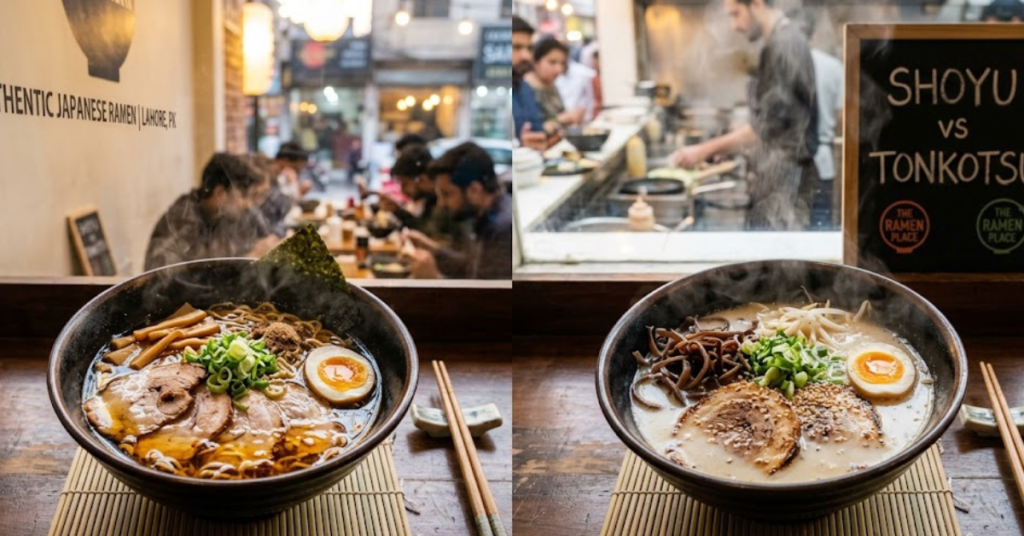

If you’ve ever looked at a ramen menu and felt slightly overwhelmed, you’re not alone. The debate around shoyu vs tonkotsu is one of the most common questions among ramen lovers. Both are iconic Japanese ramen styles, but they offer completely different flavors, textures, and eating experiences.
At first glance, they may just look like two bowls of noodles. But once you understand the broth, ingredients, and cooking methods, the difference becomes very clear. Whether you’re new to ramen or just trying to choose your next bowl wisely, this guide breaks it down in a simple and practical way.
What Is Shoyu Ramen?
Shoyu ramen is built around soy sauce-based broth. The word “shoyu” literally means soy sauce in Japanese.
Shoyu Broth Characteristics
- Clear to dark brown broth
- Light to medium body
- Savory and slightly salty flavor
- Made with chicken or vegetable stock
- Enhanced with soy sauce seasoning
The result is a balanced, clean-tasting bowl that feels lighter compared to richer ramen styles.
What Is Tonkotsu Ramen?
Tonkotsu ramen is completely different in both taste and preparation. It comes from boiling pork bones for many hours until the broth becomes rich and creamy.
Tonkotsu Broth Characteristics
- Thick, cloudy, and creamy texture
- Rich pork flavor
- High fat and collagen content
- Deep umami taste
- Often topped with fatty chashu pork
This style is known for being bold, heavy, and deeply satisfying.
Shoyu vs Tonkotsu: Key Flavor Differences
When comparing shoyu vs tonkotsu ramen, the biggest difference is flavor intensity.
Shoyu Taste Profile
- Light and balanced
- Slightly salty
- Clean finish
- Easy to drink broth
Tonkotsu Taste Profile
- Rich and heavy
- Creamy and fatty
- Strong pork flavor
- Lingering umami aftertaste
In simple terms, shoyu is lighter and more refreshing, while tonkotsu is bold and indulgent.
Shoyu vs Tonkotsu Broth: What Makes Them Different?
The real difference lies in how the broth is made.
Shoyu Broth
- Based on clear stock (chicken or vegetables)
- Seasoned with soy sauce tare
- Simmered gently
Tonkotsu Broth
- Made by boiling pork bones for 12–18 hours
- Bones are broken down completely
- Fat and collagen emulsify into the broth
This process gives tonkotsu its signature creamy white appearance.
Miso vs Shoyu vs Tonkotsu: How They Compare
Ramen has several major styles, and miso is another popular option alongside these two.
Miso Ramen
- Based on fermented soybean paste
- Bold, slightly sweet, and earthy
- Thick and hearty but not as creamy as tonkotsu
Comparison Overview
- Shoyu: Light, soy-based, balanced
- Tonkotsu: Rich, pork-based, creamy
- Miso: Fermented, strong, slightly sweet
So when people compare miso vs shoyu vs tonkotsu ramen, they’re really choosing between light, bold, or deeply savory profiles.
Shio vs Shoyu vs Tonkotsu Ramen
Shio-ramen is another important style worth mentioning.
Shio Ramen
- Salt-based seasoning
- Very light and clear broth
- Mildest flavor profile
How They Rank in Intensity
- Shio: Lightest
- Shoyu: Medium
- Tonkotsu: Heaviest
This comparison helps you understand shio vs shoyu vs tonkotsu ramen at a glance.
Shoyu vs Tonkotsu Taste: Which One Stands Out?
Taste preference depends on your mood and food style.
Choose Shoyu If You Like:
- Light and clean flavors
- Less greasy food
- Balanced umami taste
- Easy-to-eat meals
Choose Tonkotsu If You Like:
- Rich, creamy broths
- Strong, bold flavors
- Comfort food experiences
- Heavier, filling meals
When it comes to shoyu vs tonkotsu taste, neither is better universally—it depends on what you’re craving.
Tonkotsu Shoyu vs Tonkotsu: What’s the Difference?
Some ramen shops combine styles, creating hybrid versions.
Tonkotsu Shoyu
- Tonkotsu broth + soy sauce seasoning
- Rich but slightly balanced flavor
- Less heavy than pure tonkotsu
Pure Tonkotsu
- Only pork bone broth
- Stronger, creamier taste
- More intense richness
So in tonkotsu shoyu vs tonkotsu, the hybrid version is slightly lighter and more balanced.
Miso Ramen vs Shoyu vs Tonkotsu: Which Is Best?
This is a common debate among ramen fans.
Quick Breakdown:
- Miso: Best for strong, earthy flavors
- Shoyu: Best for balance and simplicity
- Tonkotsu: Best for rich, indulgent meals
When people ask miso ramen vs shoyu vs tonkotsu, the answer usually comes down to personal preference rather than a clear winner.
Shoyu vs Tonkotsu Which Is Better?
There is no absolute winner in shoyu vs tonkotsu which is better. Instead, think of it like this:
- Shoyu is like a light soup you can enjoy anytime
- Tonkotsu is like a rich comfort dish for special cravings
Your choice depends on mood, appetite, and taste preference.
What Reddit Users Say About Shoyu or Tonkotsu
Discussions around shoyu vs tonkotsu reddit threads usually show a split opinion.
Common opinions include:
- Tonkotsu is more flavorful but heavy
- Shoyu is more drinkable and everyday-friendly
- Beginners often prefer shoyu first
- Ramen lovers enjoy tonkotsu for depth
Most people agree both have their place in Japanese cuisine.
How to Choose Between Shoyu and Tonkotsu
Here’s a simple way to decide:
Pick Shoyu If:
- You want something light
- You prefer subtle flavors
- You’re new to ramen
Pick Tonkotsu If:
- You love rich, creamy food
- You want strong flavor impact
- You enjoy comfort meals
FAQs About Shoyu or Tonkotsu
What is the main difference between shoyu and tonkotsu?
Shoyu is soy sauce-based and light, while tonkotsu is pork bone-based and rich.
Is tonkotsu heavier than shoyu?
Yes, tonkotsu is much richer and more filling.
Which is healthier, shoyu or tonkotsu?
Shoyu is generally lighter and lower in fat compared to tonkotsu.
What does shoyu ramen taste like?
It tastes savory, slightly salty, and well-balanced.
What does tonkotsu ramen taste like?
It is creamy, fatty, and deeply flavorful with strong pork umami.
Which is better for beginners?
Shoyu is often recommended for beginners due to its lighter taste.
Can you mix shoyu and tonkotsu?
Yes, some ramen styles like tonkotsu shoyu combine both flavors.
Conclusion
Understanding shoyu vs tonkotsu is really about understanding two very different ramen experiences. Shoyu offers a light, balanced, and comforting bowl, while tonkotsu delivers a rich, creamy, and deeply satisfying flavor.
Neither is better than the other—they simply suit different moods and preferences. If you enjoy subtle, everyday comfort food, shoyu is a great choice. If you want bold, indulgent flavor, tonkotsu will always stand out.
Once you explore both, you’ll likely find yourself switching between them depending on what you’re craving that day.