
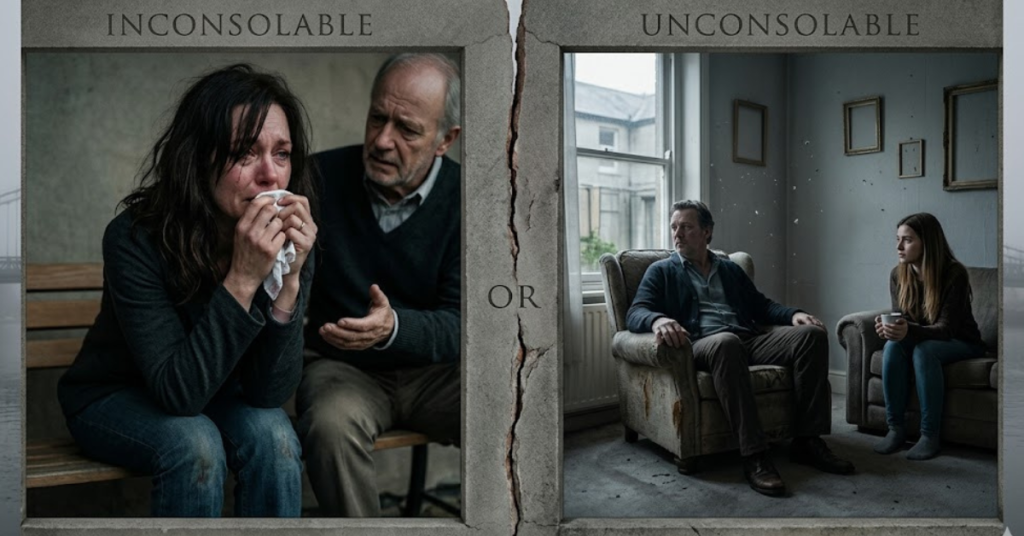

The confusion between inconsolable or unconsolable is surprisingly common, especially when people are writing emotional or descriptive sentences. Both words look similar, and at first glance, they might seem interchangeable. But in standard English, only one of them is widely accepted.
If you’ve ever paused and wondered “is it inconsolable or unconsolable?”, you’re not alone. This is one of those grammar questions that shows up in writing, storytelling, and even casual conversation. In this guide, we’ll break down the correct spelling, meaning, and real usage so you can confidently use the right word every time.
Inconsolable or Unconsolable: Which Is Correct?
The correct word is “inconsolable.”
“Unconsolable” is sometimes used informally, but it is not widely accepted in standard English dictionaries or formal writing.
So when comparing inconsolable or unconsolable, the correct answer is:
- Correct: inconsolable
- Incorrect or non-standard: unconsolable
What Does Inconsolable Mean?
The word inconsolable describes someone who is so upset, heartbroken, or distressed that they cannot be comforted.
It usually refers to strong emotional pain.
Simple Meaning
- unable to be comforted
- extremely sad or grief-stricken
- emotionally overwhelmed
Inconsolable or Unconsolable Meaning in Context
When people search for inconsolable or unconsolable meaning, they are usually trying to understand emotional expression in writing or speech.
Examples of Inconsolable in Sentences
- The child was inconsolable after losing his toy.
- She was inconsolable after hearing the news.
- He became inconsolable following the loss of his pet.
These examples show deep emotional distress that cannot be easily comforted.
Why “Inconsolable” Is the Correct Word
The word “inconsolable” comes from:
- “in-” meaning “not”
- “consolable” meaning “able to be comforted”
So the literal meaning is:
- not able to be comforted
This is why “inconsolable” is the correct and accepted form in English grammar.
Is It Inconsolable or Unconsolable?
Many people mistakenly use “unconsolable” because:
- “un-” is a common negative prefix in English
- it sounds logical in casual speech
- it appears in informal writing online
However, standard English prefers “inconsolable.”
Inconsolable or Unconsolable Which Is Correct in Writing?
In formal writing, essays, and professional communication:
- always use inconsolable
“Unconsolable” may still appear in:
- informal speech
- social media posts
- non-standard writing
But it is not considered correct in grammar standards.
Emotional Meaning of Inconsolable
The word is often used in emotional or psychological contexts.
Situations Where It’s Used
- grief and loss
- heartbreak
- extreme sadness
- emotional shock
Emotional Intensity
“Inconsolable” describes a level of sadness where:
- comfort does not help
- emotional pain is overwhelming
- recovery takes time
Inconsolable in Literature and Storytelling
Writers often use the word “inconsolable” to create emotional depth in stories.
Example in Literature Style
- The hero stood inconsolable at the ruins of his home.
- She remained inconsolable long after the tragedy.
This helps readers feel the intensity of the moment.
Why People Confuse Inconsolable or Unconsolable
The confusion happens for a few simple reasons:
1. Prefix Confusion
People assume “un-” and “in-” are interchangeable.
2. Sound Similarity
Both words sound nearly identical when spoken.
3. Informal Usage Online
Social media often spreads incorrect versions.
4. Logical Assumption
Since “unhappy” is correct, people assume “unconsolable” must also be correct.
Simple Trick to Remember the Correct Form
Here’s an easy way to remember:
- “Consolable” means able to be comforted
- Add “in-” → inconsolable = not able to be comforted
So:
- in + consolable = correct form
Inconsolable or Unconsolable in Everyday Use
In everyday communication, “inconsolable” is the only standard word you should rely on.
Correct Usage Examples
- The baby was inconsolable after waking up.
- She felt inconsolable after the breakup.
- He was inconsolable during the funeral.
Incorrect Usage Examples
- The baby was unconsolable after waking up.
- She felt unconsolable after the breakup.
Inconsolable in Psychology and Emotional Context
In psychological language, “inconsolable” may be used to describe intense emotional states such as:
- grief response
- emotional dysregulation
- deep sadness episodes
It is not a clinical diagnosis but a descriptive emotional term.
Common Synonyms of Inconsolable
To better understand usage, here are similar words:
- devastated
- heartbroken
- grief-stricken
- sorrowful
- distressed
- overwhelmed
These help express similar emotional intensity.
FAQs
Is it inconsolable or unconsolable?
The correct word is inconsolable.
What is the correct spelling: inconsolable or unconsolable?
Inconsolable is the correct and standard spelling.
What does inconsolable mean?
It means unable to be comforted due to extreme sadness or grief.
Why do people say unconsolable?
It is usually a spelling mistake caused by confusion with English prefixes.
Is unconsolable a real word?
It appears in informal usage but is not considered standard English.
Can inconsolable be used in writing?
Yes, it is commonly used in formal writing, literature, and emotional descriptions.
What is a synonym for inconsolable?
Words like heartbroken, devastated, and grief-stricken are similar in meaning.
Conclusion
The confusion between inconsolable or unconsolable is understandable, but the correct and widely accepted form is “inconsolable.” It is the standard word used in English to describe deep emotional pain or sadness that cannot be comforted.
While “unconsolable” may appear in informal writing, it is not recognized in formal grammar or dictionaries. Understanding this difference helps improve clarity, especially in emotional writing, storytelling, and professional communication.
Now that you know the correct usage, you can confidently use “inconsolable” in both writing and speech without hesitation.